

What Is the Disadvantage of a Treadle Sewing Machine

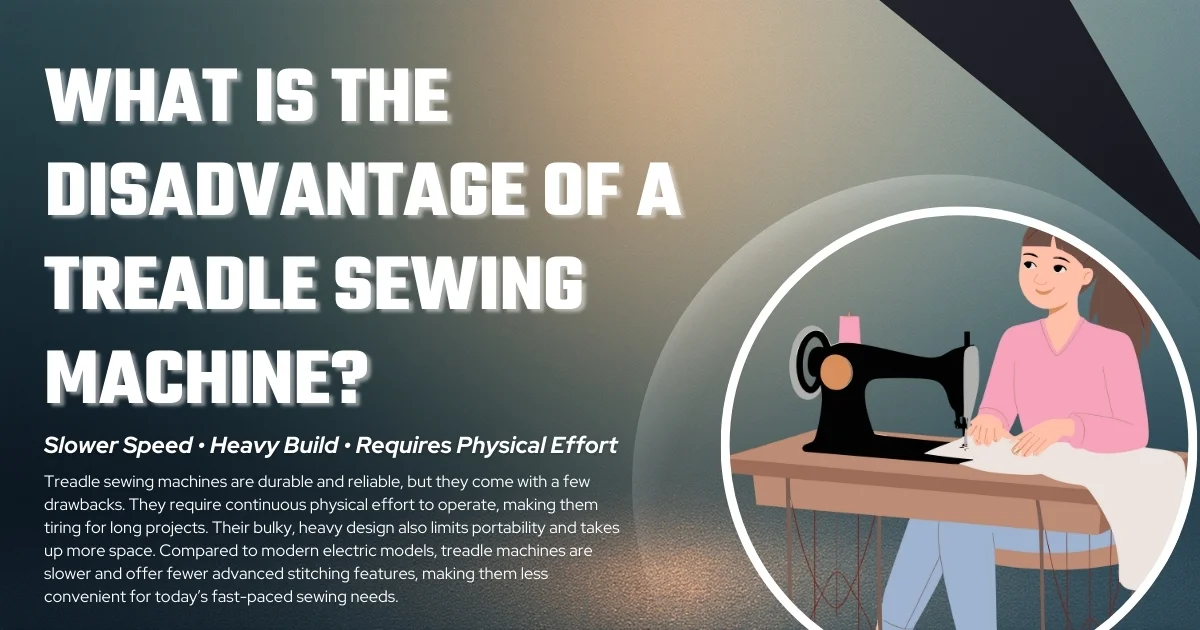
Treadle sewing machines have been used for generations and are still valued for their durability, simplicity, and “no electricity needed” operation. But despite these advantages, treadle machines come with several limitations—especially for today’s tailors, boutique owners, and home users who prefer faster and smoother stitching.
If you’re wondering whether a treadle machine is still worth using, here are the main disadvantages you should know.
1. Slow Stitching Speed Compared to Modern Machines
Treadle machines depend entirely on foot pedal movement, which limits the speed. You cannot match the fast, consistent stitching output of electric or direct-drive machines.
Why It’s a Problem
- Slows down production
- Not suitable for bulk orders
- Takes more effort, more time
For tailors who handle daily orders, this slow speed becomes a major drawback.
2. Requires Physical Effort and Can Cause Fatigue
Using a treadle machine means constant pedaling to keep the machine running. This requires leg and foot strength.
Common Issues
- Leg pain
- Fatigue after long hours
- Reduced productivity
- Not suitable for elderly users
Electric machines easily solve this problem with motor-powered stitching.
3. Limited Stitch Options
Most treadle sewing machines offer only basic straight stitching.
Why This Is Limiting
- No zig-zag stitch
- No decorative stitches
- No buttonhole or creative patterns
- Cannot handle advanced garment finishing
For modern boutique and tailoring needs, this is a big disadvantage.
4. Difficult to Handle Thick or Stretch Fabrics
Treadle machines struggle with:
- Multiple fabric layers
- Denim
- Stretch materials
- Heavy materials like curtains or upholstery
Electric and industrial machines from brands like Usha, Singer, Jack, Brother, and Juki can handle these fabrics with ease.
5. Takes More Space and Needs a Stable Setup
A treadle machine comes with:
- A large table
- A heavy machine head
- A pedal wheel system
Problems
- Requires dedicated space
- Not portable
- Difficult to move or reposition
Electric sewing machines are compact, lightweight, and easy to store.
6. Higher Maintenance for Moving Mechanical Parts
Treadle machines have many mechanical parts that rely on manual motion. Over time, these parts need:
- Frequent oiling
- Belt adjustments
- Wheel alignment
- Regular tightening of screws
If maintenance is ignored, the machine becomes noisy and unstable.
7. Lack of Precision and Consistency
Because the machine depends on how fast you pedal:
- Stitch length may vary
- Speed control becomes difficult
- Beginners find it challenging
- Work quality may differ from project to project
Electric motors maintain consistent stitch output automatically.
8. Cannot Support Modern Attachments Easily
Most modern add-ons require:
- Motor control
- Multi-stitch support
- Automatic functions
Treadle machines cannot support these, making them unsuitable for advanced tailoring needs.
Conclusion
Treadle sewing machines are strong and long-lasting, but they cannot match the speed, comfort, and versatility of modern electric or direct-drive sewing machines. Their main disadvantages include:
- Slow stitching speed
- Physical effort required
- Limited stitch functions
- Difficulty handling thick fabrics
- Frequent maintenance
- Lack of precision
- No support for modern sewing features
For today’s tailoring shops, boutiques, and home users, upgrading to an electric sewing machine from Usha, Singer, Jack, Brother, Juki, or Revo offers far better productivity, comfort, and finish quality.
FAQs
Are treadle sewing machines still good to use?
Yes, they work well for basic straight stitching but are not suitable for modern tailoring needs.
Why are treadle machines slower?
They depend completely on manual pedaling, so speed is limited by the user.
Can treadle machines stitch thick fabrics?
Not effectively. Electric and direct-drive machines handle thick fabrics much better.
Do treadle machines require more maintenance?
Yes. Their mechanical parts often need more oiling, belt adjustments, and alignment.
Are treadle machines suitable for boutiques?
No. They lack stitch variety, speed, and precision needed for boutique-level work.
What is the biggest drawback of treadle machines?
Physical effort and slow speed, which reduce productivity for modern tailors.