
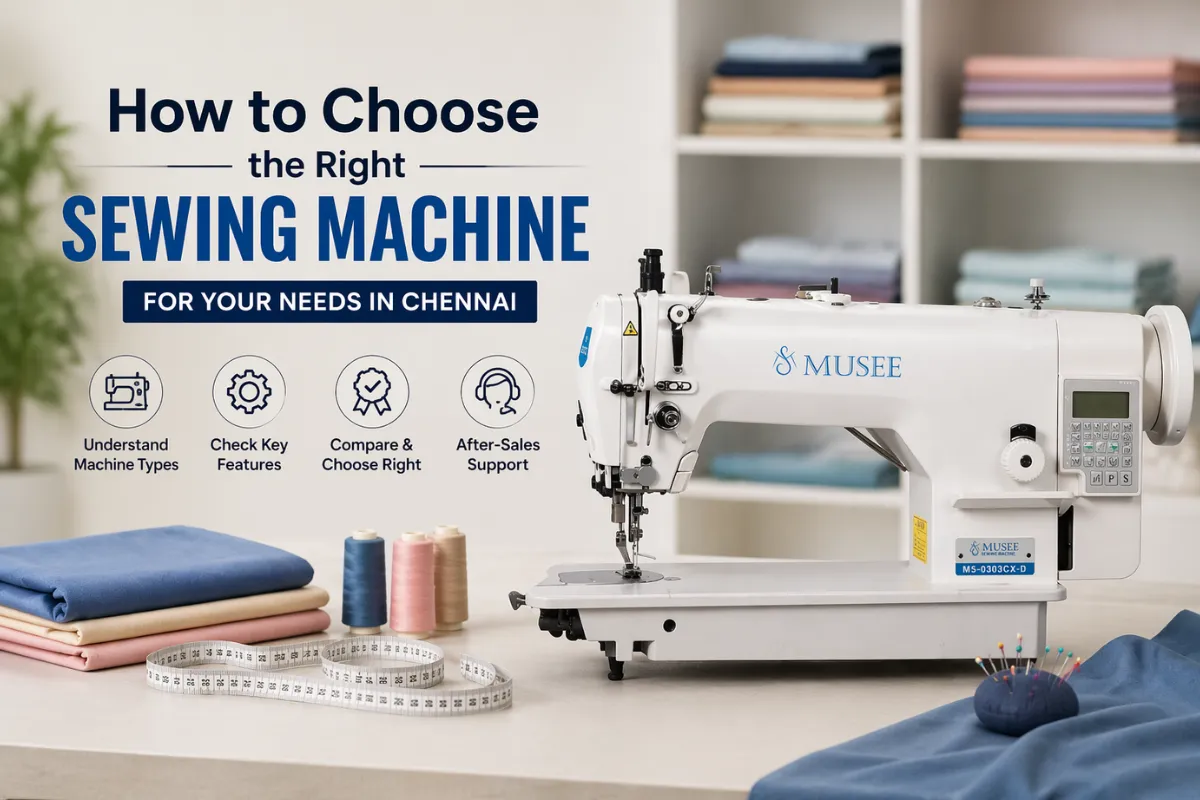
How to Choose the Right Sewing Machine for Your Needs in Chennai

Choosing a sewing machine today is not as simple as it used to be. Walk into any store in Chennai, and you’ll see dozens of models—each designed for a specific purpose. Some are built for simple home stitching, while others are meant for continuous industrial use.
The real challenge is not finding a sewing machine.
It’s choosing the right one for your exact need.
This guide is written to help you make a clear, confident decision—without confusion, without technical overload, and without making a costly mistake.
Start with One Simple Question: What Will You Use It For?
Before you even look at brands or features, you need clarity on usage.
Ask yourself:
- Are you stitching occasionally at home?
- Are you planning to start a tailoring business?
- Do you work with heavy materials like denim or leather?
- Do you need speed and productivity for bulk work?
Your answers will automatically narrow down your options.
Because in reality, there is no “best” sewing machine—only the best one for your purpose.
Understand the Main Types of Sewing Machines
Once your purpose is clear, the next step is understanding the basic categories.
Domestic Sewing Machines
These are ideal for:
- Home use
- Beginners
- Light to medium fabrics
They are compact, easy to use, and designed for comfort rather than speed.
Industrial Sewing Machines
These are built for:
- Tailoring shops
- Boutiques
- Production units
They are faster, more powerful, and designed for long working hours without overheating.
Overlock (Interlock) Machines
Used for:
- Edge finishing
- Stretch fabrics
- Garment production
If you want a professional finish on clothes, this becomes essential.
Special Purpose Machines
Includes:
- Walking foot machines (for thick fabrics)
- Bag closer machines
- Zig-zag machines
These are chosen based on very specific needs.
Key Features You Should Actually Care About
Many buyers get distracted by features they will never use. Instead, focus only on what matters.
1. Stitch Type
Straight stitch is enough for most tasks.
Zig-zag is useful for flexibility and stretch fabrics.
2. Motor Type
- Clutch motor: Powerful, but noisy
- Servo motor: Quiet, energy-efficient, and smooth
For most users today, servo motors are a better choice.
3. Speed
Industrial machines offer high speed, which improves productivity.
For home users, moderate speed is more than enough.
4. Fabric Compatibility
This is one of the most important factors.
Some machines handle:
- Light fabrics like cotton
Others are built for:
- Thick materials like denim, canvas, or leather
Choosing the wrong machine here can lead to constant frustration.
5. Ease of Use
If you are a beginner, choose something:
- Simple to operate
- Easy to maintain
- With minimal adjustments
Complex machines may look attractive, but they slow you down if you’re not experienced.
Why Location Matters When Buying in Chennai
Buying a sewing machine is not just about the product—it’s also about support and service.
In a city like Chennai, choosing a local, trusted dealer makes a big difference.
Because you may need:
- Installation guidance
- Basic training
- Service support
- Spare parts availability
Without proper support, even a good machine can become difficult to manage.
Common Mistakes Buyers Make
Many people rush into buying without clarity. Here are mistakes you should avoid:
Buying Based on Price Alone
A cheaper machine may not suit your work.
And a costly machine may offer features you don’t need.
Ignoring Fabric Type
This is the most common mistake.
Machines are designed for specific fabric ranges.
Choosing Industrial Machines for Home Use
Industrial machines are powerful but not always suitable for beginners or home environments.
Not Checking After-Sales Support
Service and support are just as important as the machine itself.
Overlooking Practical Needs
Things like space, power consumption, and usage frequency matter more than extra features.
A Simple Way to Decide
If you’re still unsure, follow this quick logic:
- Home stitching → Domestic machine
- Regular tailoring → Industrial machine
- Professional garment finishing → Add overlock machine
- Heavy fabric work → Walking foot or heavy-duty machine
This basic framework works for most buyers.
Final Thoughts
Choosing the right sewing machine is not about selecting the most advanced model.
It’s about selecting the one that fits your work, your comfort, and your long-term usage.
Take your time. Ask the right questions. Understand your needs clearly.
A well-chosen machine will not just make your work easier—it will improve your efficiency, consistency, and confidence.
A domestic sewing machine is usually the best choice for beginners. It is easy to use, requires less maintenance, and is suitable for basic stitching needs.
You can, but it may not always be practical. Industrial machines are faster and noisier, and they require more space and handling experience.
Industrial sewing machines are ideal for tailoring as they offer better speed, durability, and performance for regular use.
Check the machine type and specifications. Machines designed for heavy-duty use or walking foot systems are suitable for thick materials.
It depends on your work. For basic stitching, straight stitch is enough. Zig-zag is useful for stretch fabrics and design flexibility.
Very important. Proper support ensures smooth usage, quick repairs, and long-term reliability of your machine.