
Automatic Zig-Zag Sewing Machine Buying Guide for Home Tailors

An automatic zig-zag sewing machine is one of the most versatile machines a home tailor can own. Whether you’re stitching blouses, kurtis, children’s clothing, school uniforms, home décor items, or performing simple alterations, a zig-zag machine offers much more flexibility than a traditional straight-stitch machine.
Many people purchase their first sewing machine after watching online videos or comparing product specifications. Unfortunately, they often focus on the number of decorative stitches or the lowest price instead of understanding how the machine will actually be used.
The best automatic zig-zag sewing machine is not the one with the highest number of stitch patterns—it is the one that matches your tailoring requirements, the fabrics you work with, and your future sewing goals.
This guide explains everything you need to know before buying an automatic zig-zag sewing machine, including its applications, essential features, common misconceptions, and how to choose the right model for your needs.
What Is an Automatic Zig-Zag Sewing Machine?
An automatic zig-zag sewing machine is a domestic or semi-professional sewing machine capable of producing both straight stitches and zig-zag stitches. Unlike traditional straight-stitch machines, it also supports multiple utility stitches and, depending on the model, decorative stitch patterns.
Modern automatic zig-zag machines often include features such as:
- Automatic buttonholes
- Stitch pattern selection
- Adjustable stitch width
- Adjustable stitch length
- Reverse stitching
- Free arm sewing
- Needle threader
- LED sewing light
These features make the machine suitable for beginners as well as experienced home tailors.
Why Home Tailors Prefer Automatic Zig-Zag Machines
One machine can perform several everyday sewing tasks.
Instead of purchasing multiple machines immediately, a zig-zag sewing machine allows users to handle:
- Garment stitching
- Basic alterations
- Decorative work
- Buttonholes
- Elastic stitching
- Children’s clothing
- Home furnishing projects
- Fabric repairs
This versatility makes it one of the most popular choices for home tailoring.
What Can You Stitch Using an Automatic Zig-Zag Machine?
Many people believe zig-zag machines are only useful for decorative stitching.
In reality, they can produce a wide range of garments.
These include:
- Blouses
- Salwar suits
- Kurtis
- Dresses
- Nightwear
- Children’s garments
- Cushion covers
- Curtains
- Table runners
- Pillow covers
- School uniforms
- Simple bags
- Alterations
- Saree falls
- Fabric repairs
For most home users, these applications cover the majority of everyday sewing needs.
Straight Stitch vs Zig-Zag Stitch
Understanding the difference helps buyers appreciate why zig-zag machines are more versatile.
Straight Stitch
Straight stitching is used for:
- Garment construction
- Seams
- Top stitching
- General tailoring
It is the most commonly used stitch in garment making.
Zig-Zag Stitch
The zig-zag stitch moves the needle from side to side.
It is useful for:
- Finishing raw fabric edges
- Sewing stretch fabrics
- Attaching elastic
- Decorative stitching
- Reinforcing seams
- Preventing fabric fraying
- Appliqué work
Because of its flexibility, the zig-zag stitch significantly expands what a home sewing machine can accomplish.
Who Should Buy an Automatic Zig-Zag Sewing Machine?
Beginners
Learning becomes easier because one machine supports several different sewing techniques.
Instead of upgrading immediately, beginners can develop multiple tailoring skills using the same machine.
Home Tailors
Home tailors who stitch garments for family members or accept occasional customer orders benefit from the machine’s versatility.
Tailoring Students
Students learning garment construction can practice:
- Straight stitching
- Curves
- Decorative work
- Buttonholes
- Edge finishing
without needing multiple machines.
Boutique Startups
Small boutiques can use an automatic zig-zag machine alongside an industrial lockstitch machine to handle specialised sewing applications.
Essential Features to Look For
Not every automatic zig-zag sewing machine offers the same features.
Focus on practical functionality rather than marketing claims.
Automatic Buttonhole Function
Buttonholes are required for:
- Kurtis
- Shirts
- Children’s clothing
- Dresses
Machines offering one-step automatic buttonholes provide greater consistency and save time.
Adjustable Stitch Width
Different projects require different zig-zag widths.
Being able to adjust width improves:
- Decorative stitching
- Elastic sewing
- Edge finishing
Adjustable Stitch Length
Changing stitch length helps when working with:
- Lightweight fabrics
- Medium fabrics
- Decorative seams
- Gathering
Greater control produces better-looking garments.
Reverse Stitch Lever
Reverse stitching secures seams at the beginning and end.
It improves garment durability and prevents stitches from opening during use.
Free Arm
A free arm allows easier stitching around:
- Sleeves
- Pant hems
- Children’s garments
- Cuffs
This feature becomes particularly useful during alteration work.
Needle Threader
Frequent thread changes are common in tailoring.
A built-in needle threader saves time and reduces eye strain.
LED Sewing Light
Proper lighting improves visibility when stitching:
- Dark fabrics
- Fine details
- Evening projects
Choosing Based on Fabric Type
Different fabrics require different machine settings.
Cotton
Automatic zig-zag machines handle cotton comfortably.
This makes them ideal for beginners.
Linen
Linen stitches well using standard straight stitches and proper needle selection.
Silk
Silk requires:
- Smooth feeding
- Correct tension
- Fine needles
Good speed control becomes particularly important.
Chiffon and Georgette
Lightweight fabrics benefit from:
- Balanced tension
- Sharp needles
- Careful feeding
Machines with adjustable stitch settings provide better control.
Stretch Fabrics
One major advantage of zig-zag machines is their ability to sew stretch fabrics more effectively than straight-stitch-only machines.
Zig-zag stitches allow seams to stretch with the fabric, reducing seam breakage.
Denim
Occasional denim stitching is possible when using appropriate needles.
However, repeated heavy-duty work is better handled by industrial sewing machines.
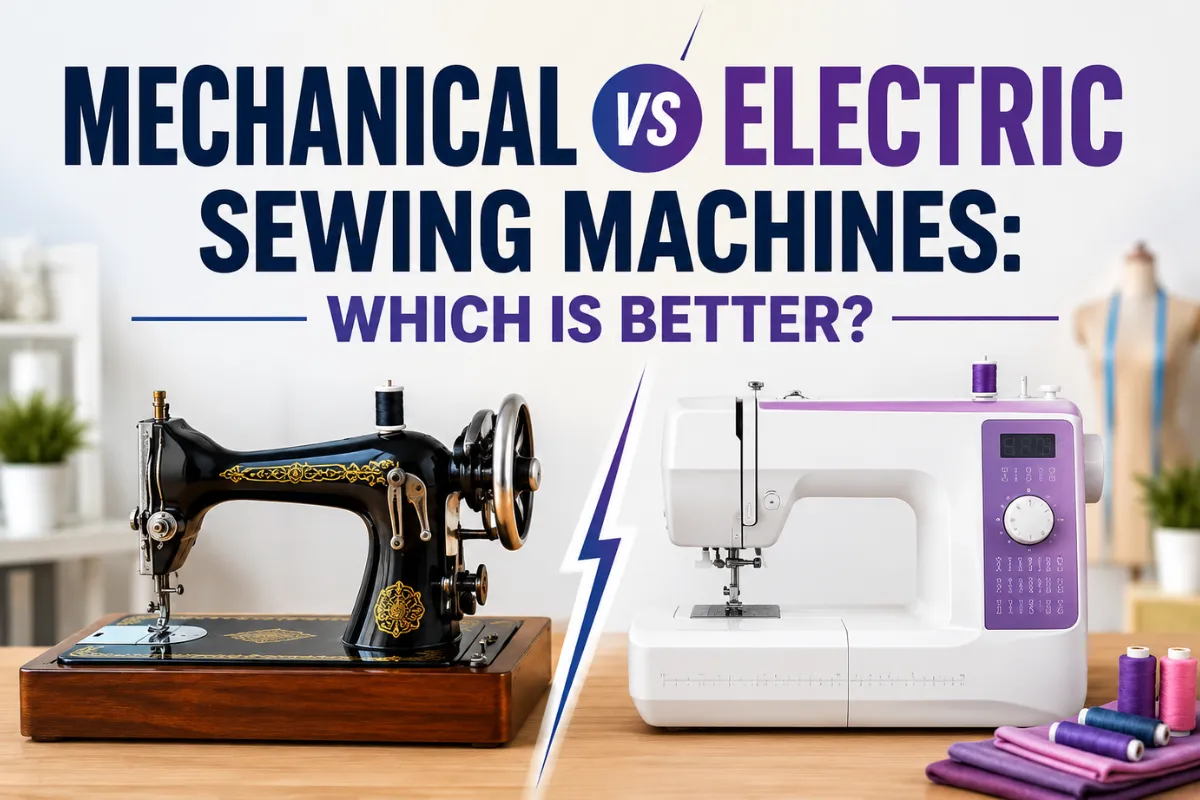
Mechanical vs Computerized Zig-Zag Machines
Many buyers struggle to choose between these two categories.
Mechanical Machines
Suitable for:
- Beginners
- Home tailoring
- Everyday stitching
- Lower maintenance
They are generally easier to operate and more affordable.
Computerized Machines
Suitable for:
- Fashion designing
- Decorative sewing
- Advanced users
- Creative projects
These machines often provide:
- LCD displays
- More stitch patterns
- Automatic settings
- Speed control
Choose computerized models only if you genuinely require these advanced functions.
Common Buying Mistakes
Buying Based on Decorative Stitches
Some machines advertise hundreds of stitch patterns.
In reality, most home tailors regularly use only:
- Straight stitch
- Zig-zag stitch
- Buttonhole
- Blind hem
- Stretch stitch
Choose practical features rather than unnecessary decorative options.
Ignoring Future Requirements
A beginner may eventually start taking tailoring orders.
Purchasing a machine with some room for growth avoids early replacement.
Focusing Only on Price
The cheapest machine may lack important features such as:
- Adjustable stitch width
- Automatic buttonholes
- Better feeding
- Quality motor
Compare value instead of price alone.
Buying Without Demonstration
Testing the machine provides valuable insight into:
- Stitch quality
- Noise
- Ease of operation
- Threading
- Fabric feeding
A demonstration often reveals differences that specifications cannot.
Do You Need an Overlock Machine Too?
Many buyers ask whether a zig-zag machine can replace an overlock machine.
The answer depends on your work.
A zig-zag machine can perform basic edge finishing.
However, if you regularly stitch garments for customers, an overlock machine produces cleaner and more durable professional finishes.
Many home tailors begin with an automatic zig-zag machine and later add an overlock machine as their workload increases.
Choosing the Right Brand
Several trusted manufacturers offer automatic zig-zag sewing machines suitable for home tailoring.
Depending on your sewing requirements, models from Usha, Singer, and Brother provide various combinations of stitch functions, ease of operation, and advanced features.
Instead of comparing brands alone, evaluate:
- Stitch quality
- Fabric compatibility
- Ease of maintenance
- Availability of accessories
- Warranty
- Local service support
Buying an Automatic Zig-Zag Sewing Machine in Chennai
Purchasing from a local sewing machine dealer offers several advantages over buying solely based on online specifications.
You can:
- Compare different machines
- Test stitch quality
- Understand features
- Receive demonstrations
- Learn basic maintenance
- Choose the correct accessories
At GS Traders Sewing, Triplicane, Chennai, customers can explore automatic zig-zag sewing machines from trusted brands including Usha, Singer, and Brother while receiving guidance based on their tailoring experience, fabric types, and future sewing requirements.
Conclusion
An automatic zig-zag sewing machine is one of the smartest investments for home tailoring because it combines versatility, ease of use, and practical functionality.
Whether you’re learning tailoring, stitching garments for your family, or planning to build a home-based tailoring business, the right zig-zag machine can support a wide range of sewing applications without requiring multiple specialised machines.
Before making your purchase, consider the garments you intend to stitch, the fabrics you use most often, the features you genuinely need, and how your tailoring goals may evolve over time. Choosing a machine based on your actual sewing requirements rather than marketing features will help you enjoy better results and a more satisfying sewing experience.
FAQ
It is used for garment stitching, decorative sewing, elastic attachment, buttonholes, alterations, children’s clothing, home décor projects, and general home tailoring.
Yes. It is one of the best choices for beginners because it offers both straight and zig-zag stitches along with several useful utility functions.
Yes. It can comfortably stitch blouses, kurtis, salwar suits, dresses, children’s garments, and many everyday clothing items.
No. While it can perform basic edge finishing, an overlock machine provides cleaner, faster, and more professional garment finishing.
Most quality machines can stitch cotton, linen, silk, chiffon, georgette, lightweight denim, and stretch fabrics when used with the appropriate needle and thread.
Buying from a trusted sewing machine dealer allows you to compare different models, receive demonstrations, understand maintenance requirements, and choose a machine that best suits your home tailoring needs.