
Best Sewing Machine for Blouse Stitching and Ladies’ Tailoring

Blouse stitching and ladies’ tailoring require much more than simply joining pieces of fabric together. Every garment demands precision, neat finishing, smooth curves, accurate fitting, and the ability to work comfortably with a wide variety of fabrics. From simple cotton blouses to designer bridal blouses, salwar suits, kurtis, gowns, and lehengas, the right sewing machine plays a significant role in achieving professional-quality results.
Many beginners believe that every sewing machine can stitch all types of ladies’ garments equally well. In reality, different machines are designed for different applications. While some are perfect for occasional home tailoring, others are built for continuous professional work in tailoring shops and boutiques.
If you are planning to purchase a sewing machine specifically for blouse stitching or ladies’ tailoring, this guide explains everything you should know before making your decision.
Why Choosing the Right Sewing Machine Matters
Ladies’ garments involve more detailed stitching than many other types of clothing.
A blouse contains curved armholes, princess cuts, darts, neck designs, piping, hooks, sleeves, lining, and decorative finishing. Similarly, kurtis, gowns, and salwar suits require accurate measurements and clean seams to achieve a professional finish.
The right sewing machine helps you:
- Produce cleaner stitches
- Improve fitting accuracy
- Handle delicate fabrics comfortably
- Reduce stitching errors
- Work faster
- Deliver consistent quality
- Accept more customer orders confidently
Choosing the wrong machine often results in uneven stitches, fabric puckering, skipped stitches, and unnecessary frustration.
What Types of Garments Will You Stitch?
Before comparing machines, identify the garments you expect to sew regularly.
Ladies’ tailoring usually includes:
- Blouses
- Salwar suits
- Kurtis
- Churidars
- Palazzo pants
- Cotton dresses
- Gowns
- Kids’ frocks
- Petticoats
- Nightwear
- Leggings alterations
- Uniforms
- Saree falls
- Alterations
If your work is limited to basic alterations, your requirements will differ from someone operating a full-fledged tailoring business.
Different Types of Sewing Machines for Ladies’ Tailoring
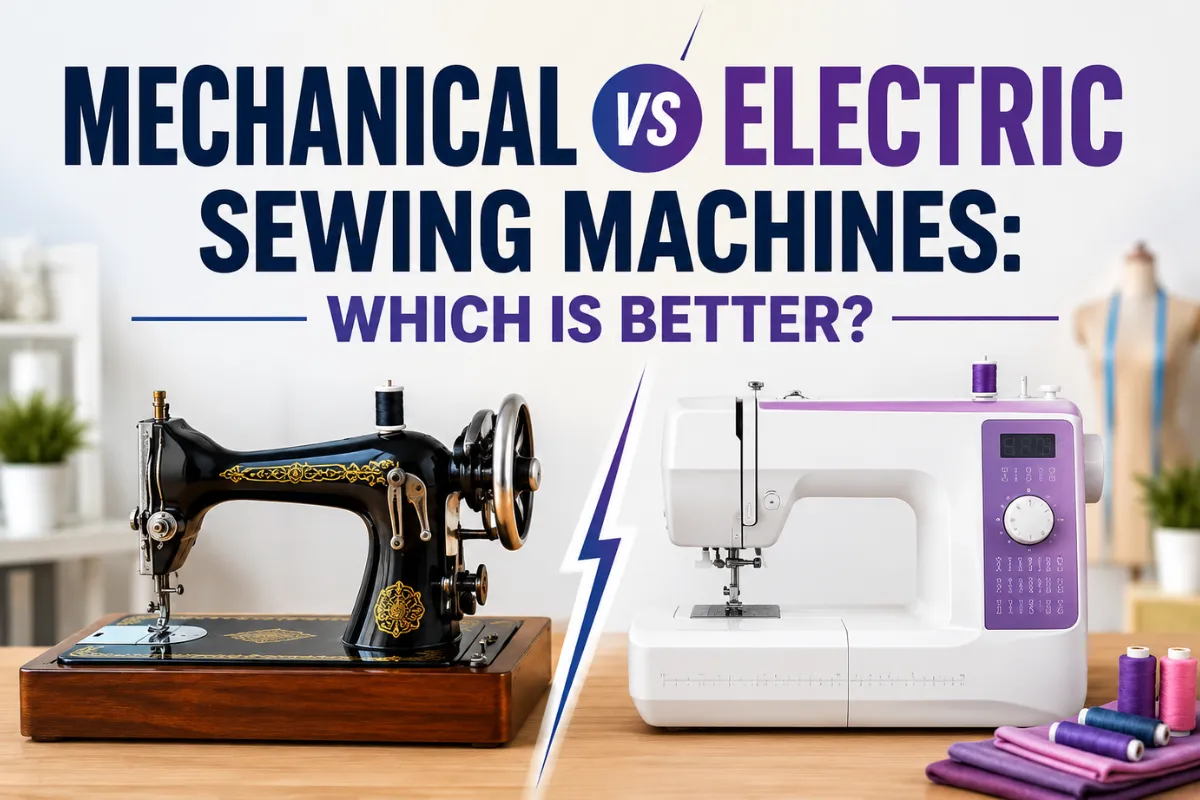
Mechanical Sewing Machine
Mechanical machines remain one of the most popular options for beginners and home tailors.
They offer:
- Straight stitch
- Zig-zag stitch
- Reverse stitching
- Adjustable stitch length
- Easy operation
These machines are suitable for:
- Home tailoring
- Basic blouse stitching
- Simple alterations
- Learning tailoring
For occasional tailoring work, a good mechanical machine is often sufficient.
Electric Zig-Zag Sewing Machine
Electric zig-zag machines are widely preferred because they provide greater flexibility.
They are capable of handling:
- Blouses
- Kurtis
- Salwar suits
- Decorative stitching
- Elastic stitching
- Buttonholes
- Children’s clothing
- Home décor items
For many ladies’ tailors, this category offers the best balance between affordability and functionality.
Computerized Sewing Machine
Computerized sewing machines are designed for users who require greater precision and creativity.
Common features include:
- Automatic buttonholes
- Decorative stitch patterns
- Speed control
- Needle positioning
- LCD display
- Memory functions
These machines are particularly useful for:
- Designer blouses
- Boutique work
- Fashion designing
- Bridal garments
- Creative stitching
However, they are not compulsory for every tailor.
Industrial Straight Stitch Machine
Once tailoring becomes a full-time profession, productivity becomes equally important.
Industrial straight stitch machines provide:
- High stitching speed
- Better durability
- Smooth operation
- Consistent stitch quality
- Longer working hours
They are commonly used for:
- Boutique production
- Tailoring shops
- Uniform stitching
- Bulk garment orders
Brands like Jack and Juki offer industrial machines designed for professional tailoring environments.
Features Every Ladies’ Tailor Should Look For
Instead of selecting a machine simply because it has numerous stitch designs, focus on practical features that improve daily sewing.
Excellent Straight Stitch Quality
Every ladies’ garment depends on strong, neat straight stitching.
A machine should produce:
- Uniform stitch length
- Balanced tension
- Smooth feeding
- Clean seams
Zig-Zag Stitch
Zig-zag stitching is useful for:
- Finishing edges
- Decorative work
- Stretch fabrics
- Elastic attachment
- Appliqué
It significantly increases the versatility of a home tailoring machine.
Adjustable Stitch Length
Different garments require different stitch lengths.
For example:
- Fine fabrics need shorter stitches.
- Thick fabrics require slightly longer stitches.
Being able to adjust stitch length improves both appearance and durability.
Buttonhole Function
Ladies’ garments frequently include buttons.
Automatic buttonholes help produce:
- Uniform size
- Better appearance
- Faster production
Free Arm Sewing
A free arm makes stitching easier around circular areas such as:
- Sleeves
- Cuffs
- Children’s garments
- Narrow hems
It is particularly useful during alteration work.
Good Speed Control
Beginners often struggle with high-speed machines.
Machines with better speed control help produce cleaner stitching around:
- Necklines
- Curves
- Armholes
- Decorative sections
Choosing a Machine Based on Fabric
Not every fabric behaves the same during stitching.
Understanding fabric compatibility helps you choose the right machine.
Cotton
Cotton remains the easiest fabric for beginners.
Almost every quality sewing machine can stitch cotton garments comfortably.
Silk
Silk requires:
- Proper needle selection
- Balanced tension
- Smooth feeding
The machine should provide steady control to prevent puckering.
Chiffon and Georgette
Lightweight fabrics can shift while sewing.
Machines with smoother feeding mechanisms generally produce better results.
Linen
Linen is stronger than cotton and benefits from:
- Sharp needles
- Proper stitch length
- Stable feeding
Denim
Occasional denim alterations can usually be managed by many domestic machines.
However, frequent heavy fabric work is better suited to industrial machines.
Stretch Fabrics
Stretch materials require:
- Zig-zag stitches
- Stretch needles
- Correct tension
For professional knitwear production, an overlock machine eventually becomes necessary.
Should Ladies’ Tailors Buy an Overlock Machine?
A common question among beginners is whether they need an overlock machine immediately.
The answer depends on the type of work.
An overlock machine is mainly used to:
- Finish raw edges
- Prevent fabric fraying
- Improve garment appearance
- Speed up production
It does not replace a regular sewing machine.
Many successful home tailors begin with a good sewing machine and later add an overlock machine as customer orders increase.
Home Tailoring vs Boutique Tailoring
Home Tailoring
Suitable machines should offer:
- Ease of use
- Moderate speed
- Multiple utility stitches
- Compact size
- Lower maintenance
Boutique Tailoring
Boutiques often require:
- Faster production
- Better durability
- Long working hours
- Professional stitch quality
Industrial machines become a better investment once order volume increases.
Common Mistakes Buyers Make
Buying Only Based on Price
A lower-priced machine may lack important features that save time during everyday tailoring.
Ignoring Future Growth
Many people purchase the simplest machine available and later realise it cannot handle increasing customer orders.
Think about where your tailoring business may be two or three years from now.
Choosing Decorative Stitches Over Stitch Quality
A machine offering hundreds of stitch patterns is not automatically better.
For ladies’ tailoring, clean straight stitching is far more important.
Not Testing Fabric
Always test the machine using the types of fabric you stitch regularly.
Observe:
- Stitch quality
- Feeding
- Noise
- Ease of operation
- Thread tension
Ignoring After-Sales Service
Every sewing machine requires maintenance.
Buying from a trusted dealer ensures easier access to:
- Spare parts
- Service
- Demonstrations
- Maintenance support
Buying a Sewing Machine in Chennai
Buying locally provides several advantages.
A showroom demonstration allows you to compare different machine types before making a decision.
You can also discuss:
- Your tailoring experience
- Types of garments
- Daily workload
- Budget
- Future expansion plans
At GS Traders Sewing, Triplicane, Chennai, customers can compare domestic and industrial sewing machines from trusted brands including Jack, Usha, Singer, Brother, and Juki to find the right solution for home tailoring, boutique work, and professional garment production.
Conclusion
The best sewing machine for blouse stitching and ladies’ tailoring is one that matches your work rather than simply offering the highest number of features.
If you are learning tailoring or stitching garments for your family, an electric zig-zag machine offers excellent versatility. As your skills and customer orders grow, an industrial straight stitch machine can improve productivity and consistency.
Before purchasing, consider the garments you stitch most often, the fabrics you use, the number of hours you sew each day, and the level of finishing your customers expect.
A carefully chosen machine will help you create better garments, work more efficiently, and confidently grow your tailoring journey.
FAQ
An electric zig-zag sewing machine is an excellent option for blouse stitching because it supports straight stitching, zig-zag stitching, buttonholes, and decorative work.
Yes. A quality domestic sewing machine can comfortably stitch blouses, kurtis, salwar suits, children’s garments, and many other ladies’ wear.
Industrial machines are recommended for professional tailors who stitch garments for customers daily or manage large workloads.
No. Beginners can start with a standard sewing machine. An overlock machine becomes useful when you want cleaner garment finishing or handle frequent customer orders.
Most quality home sewing machines can stitch cotton, linen, silk, chiffon, georgette, and lightweight denim when used with the correct needle and thread.
Check stitch quality, ease of operation, zig-zag capability, buttonhole function, speed control, fabric compatibility, warranty, service availability, and whether the machine suits your future tailoring needs.