
Industrial vs Domestic Sewing Machines: What Should You Buy?

When you start looking for a sewing machine, one question comes up almost immediately:
Should you choose an industrial machine or a domestic one?
At first glance, both may look similar. They stitch fabric, use thread, and serve the same basic purpose. But in reality, they are built for completely different types of users.
Choosing the wrong type can lead to wasted money, inefficient work, and unnecessary frustration.
This guide will help you understand the differences clearly—so you can make a practical, confident decision.
The Core Difference in One Line
If you want a simple way to understand:
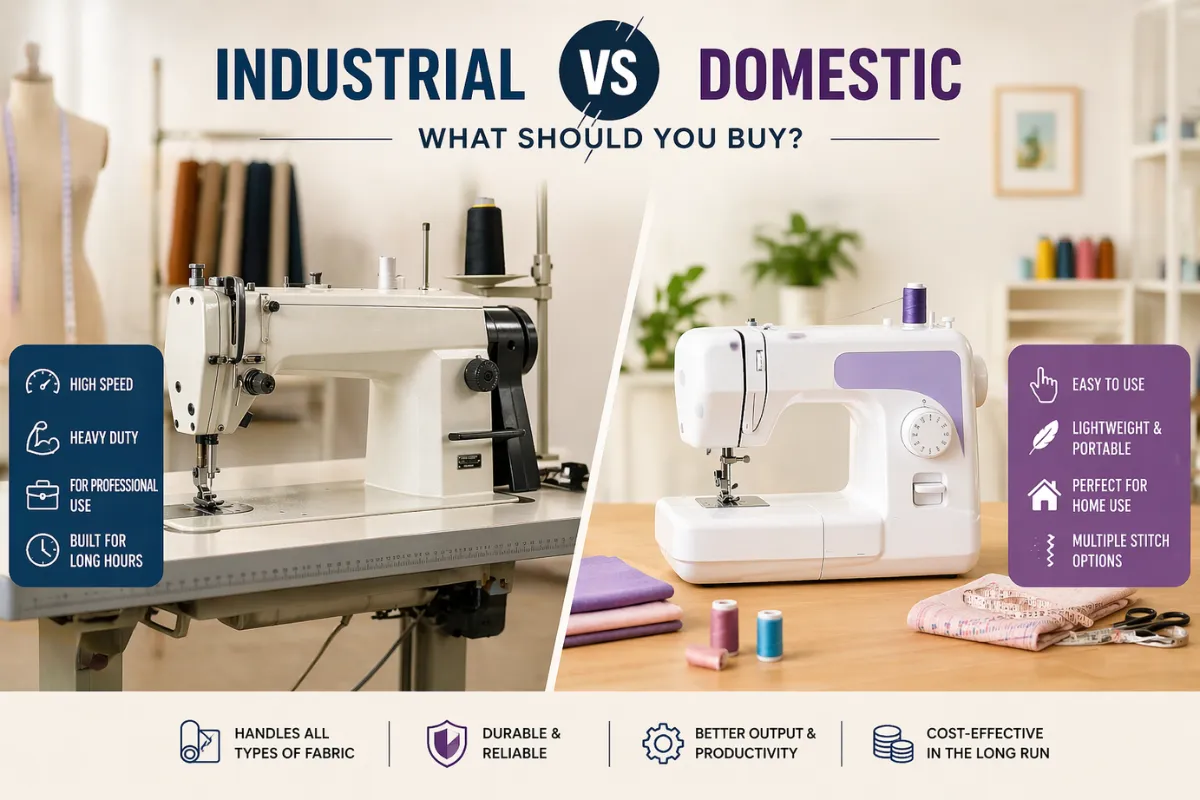
- Domestic machines are built for convenience
- Industrial machines are built for performance
Everything else comes down to how you plan to use the machine.
What Is a Domestic Sewing Machine?
Domestic sewing machines are designed for:
- Home use
- Learning and practice
- Light to moderate stitching
They are compact, easy to operate, and suitable for users who stitch occasionally or for personal needs.
When a Domestic Machine Makes Sense
A domestic machine is ideal if:
- You are a beginner
- You stitch occasionally
- You work with light fabrics like cotton or polyester
- You need a machine for household use
It gives you flexibility without complexity.
What You Can Expect
- Multiple stitch patterns (in many models)
- Lightweight and portable design
- Lower speed compared to industrial machines
- Quiet operation
These machines focus on ease rather than speed or power.
What Is an Industrial Sewing Machine?
Industrial sewing machines are designed for:
- Continuous use
- High-speed stitching
- Professional tailoring and production
They are built to handle long working hours and heavy workloads without performance drop.
When an Industrial Machine Is the Right Choice
An industrial machine is suitable if:
- You run a tailoring shop
- You handle bulk orders
- You work daily for long hours
- You need consistent speed and output
This is where performance becomes more important than convenience.
What You Can Expect
- High stitching speed
- Strong motor performance
- Durable metal body
- Consistent output even under heavy use
These machines are not about comfort—they are about productivity.
Key Differences You Should Understand
Let’s break it down in practical terms.
1. Speed
- Domestic: Moderate speed, suitable for controlled stitching
- Industrial: Very high speed, designed for efficiency
If speed matters, industrial machines clearly stand out.
2. Usage Time
- Domestic: Designed for short, occasional use
- Industrial: Built for long hours of continuous work
Using a domestic machine for heavy daily work can reduce its lifespan.
3. Fabric Handling
- Domestic: Works well with light to medium fabrics
- Industrial: Can handle thick and heavy materials easily
This becomes critical if your work involves denim, canvas, or layered stitching.
4. Ease of Use
- Domestic: Beginner-friendly
- Industrial: Requires basic experience
Industrial machines may feel overwhelming for first-time users.
5. Noise and Setup
- Domestic: Quiet and portable
- Industrial: Slightly noisier and requires a fixed setup
Space and environment matter when choosing between the two.
6. Cost Perspective
- Domestic: Lower initial investment
- Industrial: Higher investment, but better long-term value for professionals
It’s not about price—it’s about usage.
A Common Mistake Buyers Make
One of the most common mistakes is:
Buying an industrial machine for home use without actual need.
Many people assume:
“Industrial means better.”
But that’s not always true.
If you don’t need high speed or heavy-duty performance, an industrial machine can feel:
- Hard to control
- Unnecessary
- Overpowering
Similarly, using a domestic machine for business work leads to:
- Slower output
- Machine strain
- Frequent issues
Which One Should You Choose?
Here’s a simple way to decide:
Choose a Domestic Machine if:
- You are learning sewing
- You stitch occasionally
- You need flexibility and ease
Choose an Industrial Machine if:
- You stitch daily
- You run a tailoring business
- You need speed and durability
Why Choosing the Right Dealer Matters
No matter which machine you choose, the buying experience matters.
Because you may need:
- Setup guidance
- Basic usage support
- Service assistance
A knowledgeable dealer helps you:
- Understand your needs
- Avoid wrong purchases
- Get long-term value from your machine
Final Thoughts
The choice between industrial and domestic sewing machines is not about which is better.
It’s about which one fits your work.
A domestic machine gives you comfort and flexibility.
An industrial machine gives you speed and productivity.
When your choice matches your usage, everything becomes easier—from stitching quality to long-term performance.
FAQ
Neither is universally better. A domestic machine is ideal for home use and beginners, while an industrial machine is better for professional and continuous work.
Yes, but it may take time to adjust. Industrial machines are faster and require better control, so beginners usually start with domestic machines.
It is worth it if you use it regularly for business or bulk work. For occasional use, it may not be necessary.
Most domestic machines can handle light to medium fabrics. For heavy materials like denim or leather, specialized or industrial machines are more suitable.
They can be slightly noisier than domestic machines, especially older motor types. Newer setups with servo motors are quieter.
Industrial machines are built for durability and long usage. However, both types can last long if used correctly and maintained well.