
What Type of Sewing Machine Is Best for Heavy Fabrics Like Denim & Leather?

Working with heavy fabrics like denim and leather is very different from stitching regular materials.
These fabrics are thicker, tougher, and less forgiving.
If your sewing machine is not designed for this purpose, you will quickly face issues like:
- Needle breakage
- Uneven stitches
- Fabric slipping
- Machine strain
This is why choosing the right sewing machine for heavy fabrics is not optional—it’s essential.
This guide will help you understand exactly what kind of machine you need and why.
Why Regular Machines Struggle with Heavy Fabrics
Most basic sewing machines are built for light to medium fabrics like cotton or polyester.
When you try to stitch heavy materials, the machine faces:
- Higher resistance from fabric layers
- Difficulty in feeding thick material smoothly
- Increased pressure on the motor and needle
As a result, you may experience:
- Skipped stitches
- Thread breakage
- Slow performance
This is not a quality issue—it’s a machine mismatch issue.
Types of Sewing Machines Suitable for Heavy Fabrics
Let’s look at the machines that are actually built to handle tough materials.
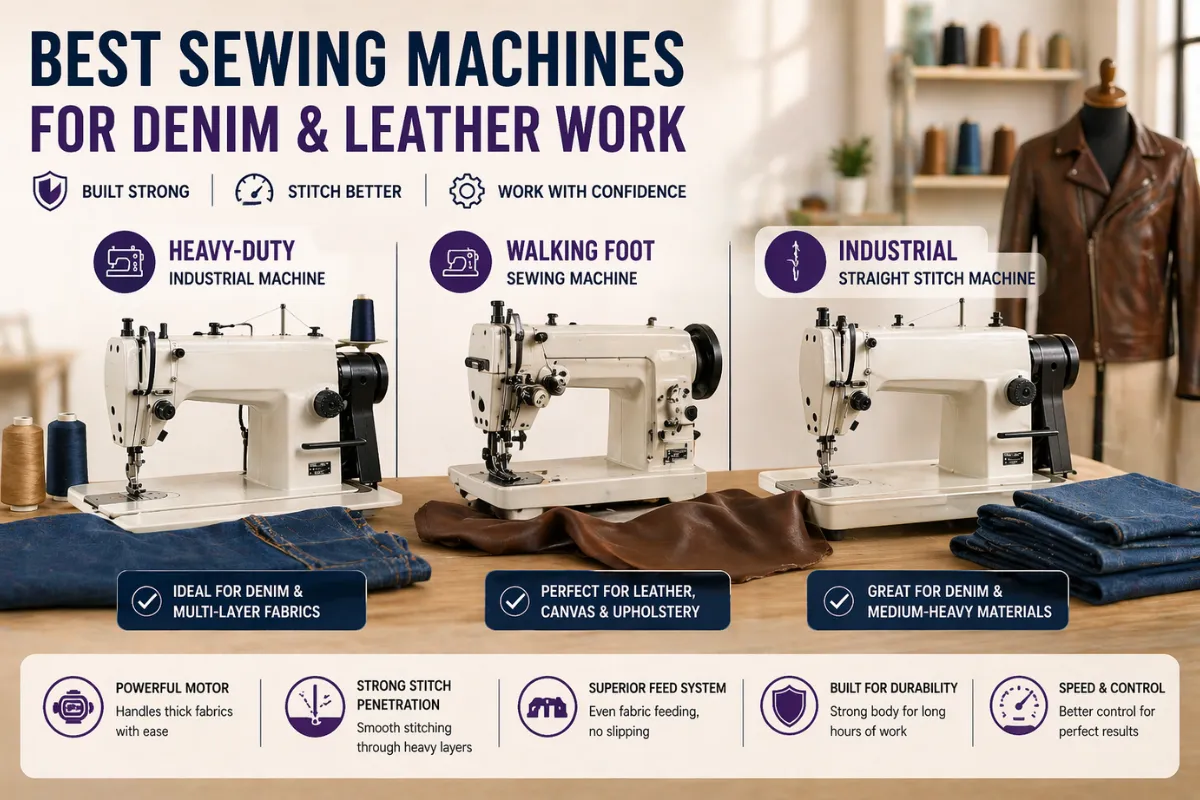
1. Heavy-Duty Industrial Sewing Machines
This is the most reliable option for heavy fabric work.
✔ Best For:
- Denim stitching
- Multi-layer fabrics
- Continuous usage
✔ Why It Works:
- Strong motor power
- Stable stitching at high speed
- Designed for long working hours
If you are working professionally, this is often the first choice.
2. Walking Foot Sewing Machines
This is one of the most effective machines for thick materials.
✔ Best For:
- Leather
- Canvas
- Upholstery work
✔ Why It’s Different:
A walking foot mechanism feeds the fabric evenly from both the top and bottom.
This prevents:
- Fabric slipping
- Uneven stitching
- Layer shifting
For precision work with heavy fabrics, this is highly recommended.
3. Industrial Straight Stitch Machines (Heavy Use)
Some industrial straight stitch machines can handle moderately heavy fabrics.
✔ Best For:
- Denim
- Layered cotton
- Medium-heavy materials
✔ Limitation:
For very thick leather or multiple layers, a specialized machine is still better.
Features You Must Look For
When selecting a machine for heavy fabrics, certain features are non-negotiable.
1. Motor Strength
A powerful motor ensures the machine can handle resistance without slowing down.
Servo motors are preferred today because they provide:
- Better control
- Smooth performance
- Lower noise
2. Stitch Penetration Power
The needle must be able to penetrate thick materials without bending or breaking.
This depends on:
- Machine design
- Motor power
- Needle compatibility
3. Feeding Mechanism
This is one of the most important factors.
Machines with:
- Walking foot systems
- Strong feed dogs
Ensure smooth fabric movement and better stitch quality.
4. Stability
Heavy fabrics require stable stitching.
Industrial machines are built with:
- Strong metal bodies
- Fixed table setups
This reduces vibration and improves accuracy.
5. Speed Control
While speed is important, control matters more when working with thick materials.
A machine that allows controlled stitching helps avoid mistakes.
Choosing Between Denim and Leather Work
Although both are heavy fabrics, they behave differently.
Denim Work
Denim is thick but flexible.
You need:
- Strong needle
- Stable stitching
- Good feed system
Many industrial machines can handle denim effectively.
Leather Work
Leather is thicker and less flexible.
You need:
- Walking foot mechanism
- Higher penetration power
- Precision control
Leather stitching requires more specialized equipment.
Common Mistakes to Avoid
Using Domestic Machines for Heavy Fabrics
Most domestic machines are not built for thick materials.
This leads to frequent breakdowns and poor results.
Ignoring Needle Type
Using the wrong needle can cause:
- Fabric damage
- Broken needles
- Poor stitching
Stitching Too Fast
Heavy fabrics require control.
High speed without control can ruin the stitching.
Not Testing the Machine
Always test with your actual fabric type before finalizing a machine.
Why Buying from the Right Dealer Matters
Heavy-duty machines are more technical than basic ones.
You may need:
- Setup guidance
- Usage support
- Maintenance advice
A knowledgeable dealer ensures:
- You choose the right machine
- You avoid costly mistakes
- You get long-term performance
Final Thoughts
Working with denim and leather requires the right combination of power, control, and stability.
Not every sewing machine is designed for this purpose—and forcing the wrong machine to do the job only leads to frustration.
Choose based on:
- Fabric type
- Work frequency
- Precision required
When the machine matches your work, you will notice:
- Better stitch quality
- Faster output
- Less effort
And most importantly, a smoother overall workflow.
FAQ
Industrial sewing machines with strong motors and stable stitching are ideal for denim, especially when working with multiple layers.
Most domestic machines are not suitable for leather. For better results, a walking foot or heavy-duty industrial machine is recommended.
A walking foot machine feeds fabric evenly from both top and bottom, making it ideal for thick and layered materials like leather and canvas.
Needles break due to high resistance, incorrect needle type, or insufficient machine power.
Speed matters, but control is more important. Controlled stitching ensures better accuracy and prevents damage.
Look for machines with strong motors, walking foot mechanisms, and good penetration power to handle thick and tough materials effectively.