
Best Sewing Machines for Tailoring Business in Chennai

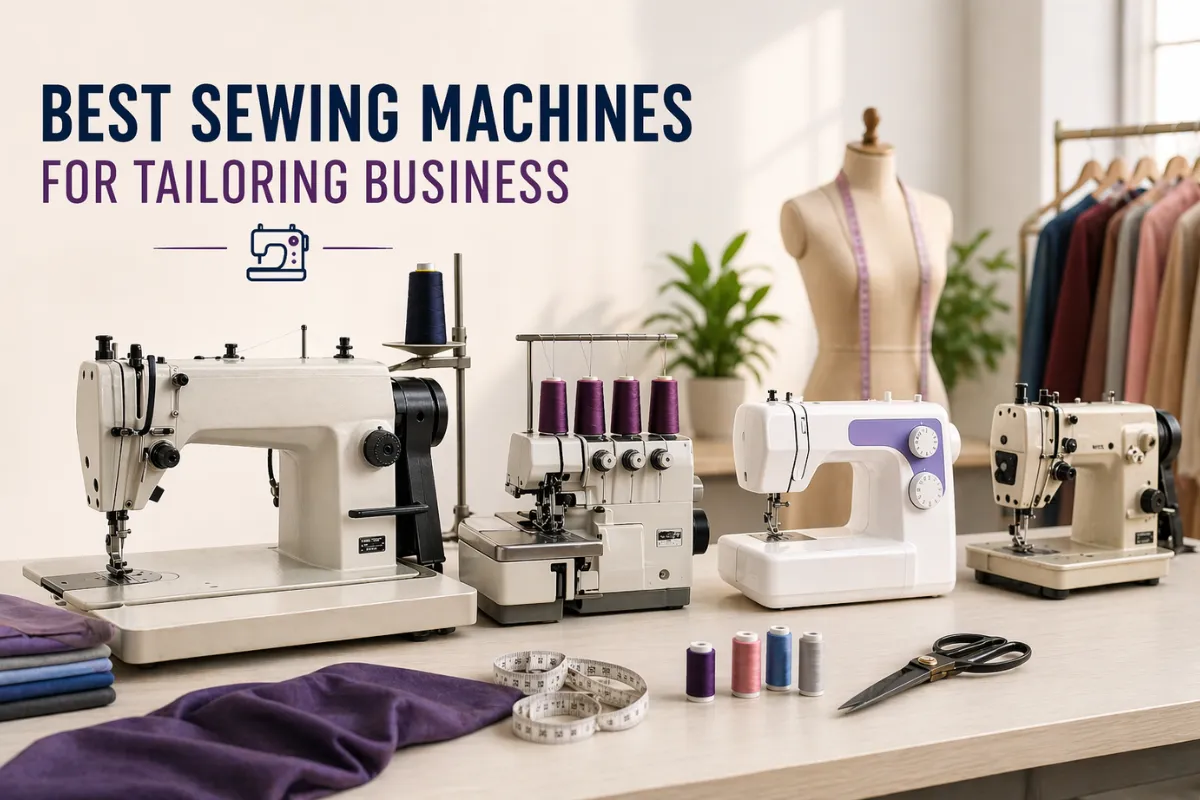
Starting or running a tailoring business in Chennai is not just about skill—it’s also about choosing the right equipment.
A sewing machine is not just a tool in tailoring.
It directly affects your speed, finish quality, consistency, and daily productivity.
Many tailors begin with a basic machine and later realize it slows them down. Others invest in advanced machines without understanding their actual requirement.
The goal is simple:
Choose a machine that matches your workload, fabric type, and business growth plans.
This guide will help you do exactly that.
What a Tailoring Business Really Needs
Unlike home stitching, tailoring work involves:
- Continuous usage
- Handling multiple fabric types
- Meeting delivery timelines
- Maintaining consistent stitch quality
Because of this, your machine must be:
- Reliable
- Durable
- Fast
- Easy to operate for long hours
Not every sewing machine is designed for this level of usage.
Types of Sewing Machines Suitable for Tailoring
Let’s break down the most relevant machine types for tailoring businesses.
1. Industrial Straight Stitch Machine
This is the most important machine for any tailoring setup.
✔ Best For:
- Daily stitching work
- Blouses, shirts, pants, uniforms
- General tailoring tasks
✔ Why It Works:
- High speed improves productivity
- Strong build ensures long working hours
- Consistent stitch quality
This machine forms the foundation of your tailoring business.
2. Overlock (Interlock) Machine
If you want a professional finish, this machine becomes essential.
✔ Best For:
- Edge finishing
- Stretch fabrics
- Garment durability
✔ Why It Matters:
Without overlocking, garments can:
- Fray easily
- Look unfinished
- Lose durability over time
For customer satisfaction, this is a must-have.
3. Zig-Zag Sewing Machine
This machine adds flexibility to your work.
✔ Best For:
- Decorative stitching
- Stretchable fabrics
- Elastic attachment
✔ Why It’s Useful:
Not every tailoring job is straight stitch.
Zig-zag machines help you handle variations easily.
4. Heavy-Duty / Walking Foot Machine (Optional)
This is required only if your work involves thicker materials.
✔ Best For:
- Denim
- Canvas
- Leather
- Multi-layer stitching
If your business focuses on heavy fabrics, this becomes a valuable addition.
Features That Matter for Tailoring Work
Instead of focusing on unnecessary features, concentrate on what actually improves your workflow.
1. Speed & Efficiency
Time is critical in tailoring.
Industrial machines with higher speed help you complete more work in less time.
2. Motor Type
Servo motors are preferred because:
- They are quieter
- Consume less power
- Offer better control
This is especially useful in small shops or residential areas.
3. Stitch Consistency
Customers notice finishing.
A machine that maintains uniform stitches improves your final output quality.
4. Fabric Compatibility
Your machine should handle:
- Cotton
- Silk
- Synthetic fabrics
And depending on your niche:
- Denim or thicker materials
5. Ease of Maintenance
A machine that is easy to maintain saves:
- Time
- Repair costs
- Downtime
For business, reliability matters more than extra features.
Building the Right Setup (Not Just One Machine)
Many new tailors make the mistake of relying on a single machine for everything.
In reality, a basic tailoring setup usually includes:
- 1 Industrial straight stitch machine
- 1 Overlock machine
As your business grows, you can add:
- Zig-zag machine
- Heavy-duty machine
This approach gives you:
- Better output quality
- Faster work completion
- Professional finishing
Common Mistakes Tailors Make
Avoid these mistakes to save both time and money.
Buying a Domestic Machine for Business
Domestic machines are not built for continuous use.
They slow down your work and wear out faster.
Ignoring Finishing Machines
Skipping overlock machines affects garment quality.
Customers can easily notice poor finishing.
Choosing Based on Price Alone
A cheaper machine may not handle your workload.
Investing in the right machine improves long-term returns.
Not Planning for Growth
If you plan to expand, choose machines that can handle increased workload.
Choosing Based on Your Business Stage
Here’s a simple way to decide based on where you are:
Beginner Tailor
- Start with an industrial straight stitch machine
- Add an overlock machine as soon as possible
Growing Tailoring Shop
- Straight stitch + overlock
- Add zig-zag machine for versatility
Advanced / High Workload
- Multiple industrial machines
- Add heavy-duty machines if required
Why Buying from the Right Dealer Matters in Chennai
A tailoring machine is a long-term investment.
You may need:
- Setup support
- Machine guidance
- Service assistance
Buying from a trusted dealer ensures:
- Correct machine selection
- Proper setup
- Ongoing support
This becomes especially important when your business depends on the machine every day.
Final Thoughts
The best sewing machine for tailoring is not the most expensive one.
It is the one that fits your workload, supports your daily operations, and grows with your business.
Start with the essentials.
Add machines based on real need.
Focus on performance, not unnecessary features.
A well-planned setup will not just improve your work—it will help you build a reliable tailoring business.
FAQ
An industrial straight stitch machine is the best starting point for tailoring work, as it offers speed, durability, and consistent performance.
Yes, if you want professional finishing. Overlock machines prevent fabric edges from fraying and improve garment quality.
Yes, you can start with one industrial machine. However, adding an overlock machine will significantly improve your output.
Industrial machines can handle a wide range of fabrics. For heavy materials, a heavy-duty or walking foot machine is recommended.
It is not mandatory initially but becomes useful as your work expands to include different stitching styles and fabric types.
Speed is very important for business. Higher speed allows you to complete more work efficiently and meet delivery timelines.