
Best Sewing Machine for Home Tailoring in India: Complete Buying Guide

Home tailoring has become a practical skill as well as a flexible source of income for many people in India. Some users purchase a sewing machine to handle simple alterations and repairs, while others want to stitch blouses, salwar suits, children’s dresses, curtains or complete garments from home.
However, the best sewing machine for home tailoring is not necessarily the machine with the highest number of stitch patterns or the most advanced display. It is the machine that matches your sewing experience, the type of clothes you plan to stitch, the fabrics you use and the amount of work you expect to handle.
A beginner learning basic stitching will have different requirements from an experienced home tailor accepting regular customer orders. Understanding these differences before buying can help you avoid spending too much on features you may never use or choosing a basic machine that you may quickly outgrow.
This guide explains the main machine types, essential features, fabric compatibility and buying considerations to help you select the right sewing machine for home tailoring in India.
What Type of Home Tailoring Work Will You Do?
Before comparing brands or models, identify what you want to stitch. Your intended work has a greater influence on machine selection than the machine’s appearance or number of accessories.
Home tailoring generally includes one or more of the following activities:
- Basic garment repairs and alterations
- Saree fall and simple hemming
- Blouse stitching
- Salwar suits and kurtis
- Children’s clothes
- Nightwear and everyday garments
- Cushion covers and curtains
- Decorative stitching
- Buttonholes and button fixing
- Tailoring orders for customers
A machine used occasionally for repairs does not need the same speed and durability as a machine used for several customer orders every day.
If you are still learning, begin with a simple and user-friendly machine. If you already have tailoring experience and plan to earn from home, look for a machine that can support longer working hours and a wider range of garment construction tasks.
Main Types of Sewing Machines for Home Tailoring
There is no single machine type that suits every home tailor. Each category has its own advantages and limitations.
Manual Sewing Machine
A manual sewing machine is operated using a hand wheel or treadle mechanism. It is commonly used for straight stitching and basic garment construction.
Manual machines are suitable for users who prefer a familiar, straightforward setup. They can handle basic tailoring work and do not depend completely on electricity when operated with a treadle stand.
However, most manual machines offer limited stitch options. They may not provide zig-zag stitching, automatic buttonholes or decorative patterns unless additional attachments or mechanisms are available.
A manual machine may be suitable when your work mainly involves:
- Straight seams
- Basic garment construction
- Simple alterations
- Saree fall stitching
- Occasional household use
Electric Zig-Zag Sewing Machine
An electric zig-zag machine is one of the most practical options for home tailoring. It usually offers straight stitch, zig-zag stitch, buttonhole functions and a selection of utility or decorative stitches.
These machines are compact, relatively easy to learn and useful for different home sewing projects. Models from approved brands such as Usha, Singer and Brother are commonly considered by home users depending on their required features.
An electric zig-zag machine can be used for:
- Garment stitching
- Edge finishing
- Elastic attachment
- Buttonholes
- Decorative stitching
- Mending
- Appliqué work
- Basic stretch-fabric sewing
This category is usually a sensible choice for beginners, tailoring students and home users who want more flexibility than a straight-stitch machine.
Computerized Sewing Machine
A computerized sewing machine uses electronic controls to select stitches, adjust settings and manage certain sewing functions. Depending on the model, it may include a digital display, automatic needle positioning, speed control, automatic buttonholes and numerous stitch patterns.
Computerized machines are useful for users interested in creative sewing, garment detailing and precise control. They can make some tasks easier, but a high number of decorative stitches should not be the only reason to buy one.
Choose a computerized machine when you genuinely require:
- Multiple stitch patterns
- Decorative garment work
- Consistent buttonholes
- Speed control
- Digital stitch selection
- Greater creative flexibility
For simple alterations and regular straight stitching, a computerized machine may be more than you need.
Industrial Straight-Stitch Machine
An industrial straight-stitch or single-needle lockstitch machine is designed for speed, consistency and longer working hours. It is usually installed with a table and motor and is suitable for serious home tailors who regularly stitch garments for customers.
Industrial machines are less portable than domestic machines and generally specialise in straight stitching. However, they provide better productivity for continuous tailoring work.
Approved industrial brands such as Jack and Juki offer machines for different professional sewing requirements.
An industrial machine may be suitable when you:
- Handle daily customer orders
- Stitch garments for several hours
- Need consistent straight seams
- Work with larger quantities
- Want faster garment production
- Plan to grow a home tailoring business
For many professional home tailors, a practical setup may eventually include an industrial straight-stitch machine for garment construction and a separate zig-zag machine for buttonholes, decorative work and special stitches.
Mechanical or Computerized: Which Is Better?
The decision between a mechanical and computerized machine depends on how you sew.
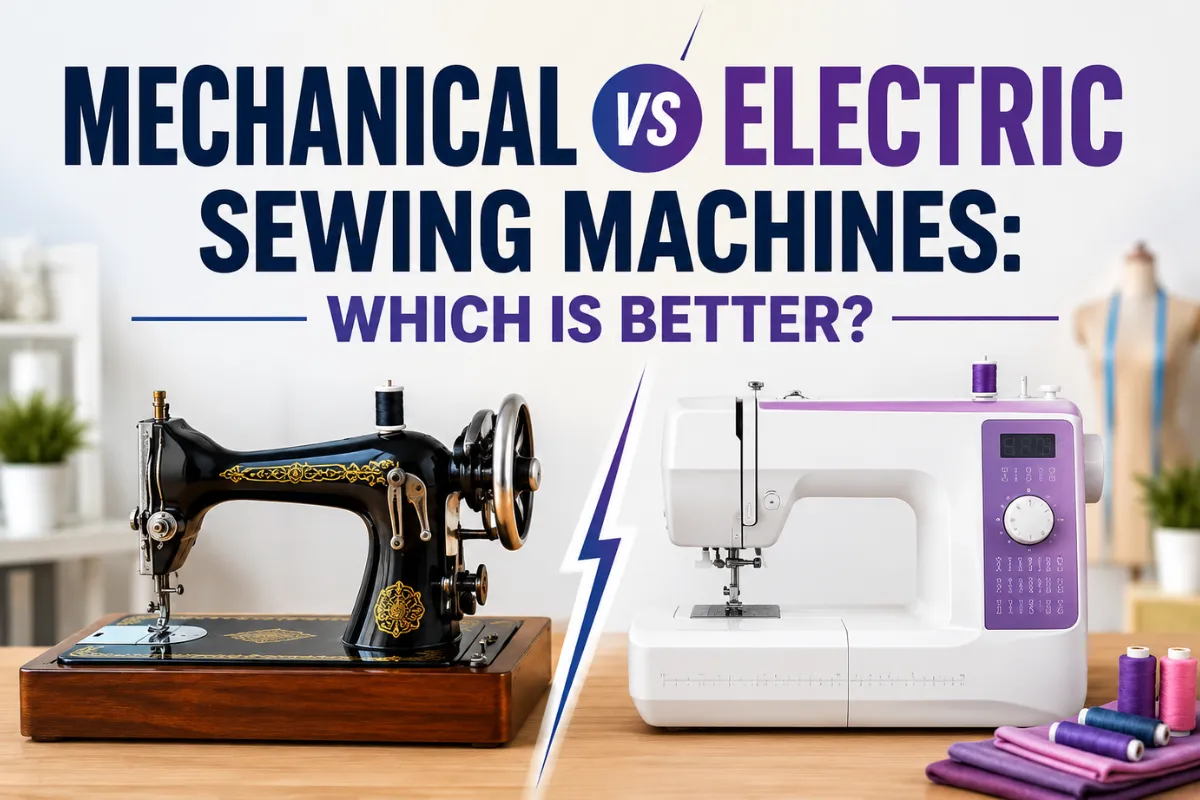
A mechanical electric machine uses knobs or dials to select stitches and adjust settings. It is usually straightforward, easy to understand and suitable for general home tailoring.
A computerized machine provides digital controls and more automated features. It can offer greater precision and convenience but may require more time to understand if you are completely new to sewing.
Choose a mechanical machine when you want:
- Simple operation
- Essential utility stitches
- Easy manual control
- General tailoring and repairs
- A machine that is not overloaded with functions
Choose a computerized machine when you want:
- More creative stitch options
- Automatic settings
- Speed control
- Digital stitch selection
- Advanced garment detailing
Do not assume that computerized automatically means better. A well-selected mechanical machine can be more useful than an advanced machine whose features do not match your work.
Essential Features to Check Before Buying
Features should be evaluated based on practical usefulness, not just quantity.
Straight Stitch Quality
Straight stitch is the foundation of garment construction. The machine should produce balanced and consistent stitches without frequent thread loops, skipped stitches or fabric pulling.
Test the machine on the type of fabric you use regularly.
Zig-Zag Stitch
Zig-zag stitching is useful for edge finishing, elastic attachment, appliqué, mending and certain stretch fabrics. It adds useful flexibility to a home tailoring machine.
Buttonhole Function
If you stitch blouses, shirts, kurtis or children’s clothing, a buttonhole function can save time and improve consistency.
Some machines provide a four-step buttonhole, while others offer a one-step automatic buttonhole. The right option depends on your workload and budget.
Free Arm
A free-arm design makes it easier to stitch narrow or circular areas such as sleeves, cuffs, trouser hems and children’s garments.
This is especially useful for alteration work.
Reverse Stitch Lever
Reverse stitching helps secure seams at the beginning and end. The control should be easy to reach and operate while sewing.
Adjustable Stitch Length and Width
Adjustable stitch length provides better control across different fabrics and sewing applications. Adjustable stitch width is useful for zig-zag and decorative stitches.
Presser Foot Options
Check whether the machine supports useful presser feet such as:
- Zipper foot
- Buttonhole foot
- Button-sewing foot
- Blind-hem foot
- Overcasting foot
You do not need every available presser foot immediately. Focus on accessories that support the garments you actually stitch.
Needle Threader
An automatic or assisted needle threader can reduce eye strain and make frequent thread changes easier.
Speed Control
Speed control is particularly helpful for beginners. It allows you to sew slowly while learning curves, corners and detailed sections.
Built-In Light
A clear sewing light improves visibility around the needle and helps with dark fabrics, detailed stitching and evening work.
Choose a Machine Based on Fabric Type
A machine that works well on lightweight cotton may not perform equally well on denim, thick canvas or highly stretchable fabric.
Cotton and Everyday Dress Materials
Most quality domestic machines can handle cotton, poplin and common dress materials when used with the correct needle, thread and tension.
These fabrics are suitable for beginners because they are generally stable and easy to control.
Silk and Delicate Fabrics
Silk, chiffon and similar materials require careful fabric handling, a suitable fine needle and balanced tension.
The machine should offer smooth feeding and good low-speed control. More power is not always better for delicate fabrics.
Denim and Thick Fabrics
Occasional denim alterations may be possible on a suitable domestic machine, but repeated heavy-fabric work requires stronger construction and appropriate needles.
Do not force several thick layers through a lightweight machine. This can cause needle damage, timing issues or poor stitch formation.
Stretch and Knit Fabrics
Stretch fabrics require the right stitch, needle and feeding control. A zig-zag or stretch stitch may be needed to prevent seams from breaking when the fabric stretches.
If knitwear forms a major part of your work, an overlock machine may eventually become an important addition to your setup.
Do You Need an Overlock Machine for Home Tailoring?
An overlock machine is not usually a replacement for a regular sewing machine. It is a supporting machine used to trim fabric edges and create clean, secure finishes.
You can begin home tailoring with a standard sewing machine. However, an overlock machine becomes valuable when you accept customer orders and want garments to have a neater internal finish.
It is especially useful for:
- Blouses
- Salwar suits
- Kurtis
- Children’s garments
- Knitwear
- Stretch fabrics
- Regular boutique work
Buy your main sewing machine first. Add an overlock machine when your order volume, finishing expectations and garment types justify the investment.
Common Mistakes to Avoid When Buying
Choosing Only by Price
The lowest-priced machine may not have the features, durability or service support required for your work. At the same time, the most expensive machine may include functions you do not need.
Compare value based on application rather than price alone.
Selecting a Machine with Too Many Stitches
A machine offering numerous decorative stitches may look impressive, but most home tailoring work depends on a smaller group of utility stitches.
Prioritise stitch quality, ease of use and fabric handling.
Ignoring After-Sales Support
Every sewing machine may eventually require cleaning, adjustment, spare parts or professional service. Buying from a reliable dealer can make long-term ownership easier.
Not Testing the Machine
Whenever possible, request a demonstration. Carry samples of the fabrics you frequently use and observe stitch quality, machine noise, speed control and fabric feeding.
Buying Without Considering Future Work
A very basic machine may be sufficient today but limiting after you begin taking tailoring orders. Consider how your work may develop over the next few years.
Home Tailoring Machine Selection by User Type
For Complete Beginners
Choose a simple mechanical electric machine with straight stitch, zig-zag stitch, reverse stitching, free arm and buttonhole support.
Easy operation is more important than a long list of decorative functions.
For Occasional Household Use
A compact manual or electric machine may be sufficient for repairs, alterations, hemming and small projects.
For Blouse and Ladies’ Tailoring
Look for consistent straight stitching, adjustable stitch length, good speed control, buttonhole support and compatibility with delicate as well as medium-weight fabrics.
For Home-Based Tailoring Orders
Consider a durable electric machine or an industrial straight-stitch machine depending on workload. An overlock machine can be added for better finishing.
For Creative Sewing
A computerized machine may be suitable when decorative stitches, appliqué, quilting, pattern work or customised garment details are important.
Why Buying Locally in Chennai Can Be Helpful
Buying a sewing machine locally allows you to understand its operation before making a decision. A proper demonstration can clarify threading, bobbin winding, stitch selection, tension adjustment and basic maintenance.
Local buying also makes it easier to discuss your exact tailoring requirements. A home user, tailoring student and professional blouse tailor should not automatically be advised to purchase the same machine.
At GS Traders Sewing in Triplicane, Chennai, customers can compare suitable machines from approved brands such as Usha, Singer, Brother, Jack and Juki based on their skill level, fabric usage and expected workload.
The right buying decision should be made after understanding how the machine will be used, not simply by choosing the model with the highest number of features.
Conclusion
The best sewing machine for home tailoring in India is the one that fits your present work while allowing reasonable room for growth.
For beginners and general household sewing, an electric zig-zag machine is often a practical starting point. For experienced home tailors handling regular customer orders, an industrial straight-stitch machine can improve speed and consistency. A computerized machine is better suited to users who genuinely need automated controls and creative stitch options.
Before buying, consider the garments you plan to stitch, the fabrics you use, your daily workload, essential stitch functions and access to service support. Testing the machine with your own fabric can also help you make a more confident decision.
A carefully selected machine will not only make sewing easier but also support better stitch quality, comfortable operation and long-term tailoring growth.
FAQ
An electric zig-zag sewing machine is a practical choice for many home tailors because it supports straight stitching, zig-zag stitching, buttonholes, alterations and decorative work. The final choice should depend on your experience, garments and workload.
A manual machine is suitable for basic straight stitching and users familiar with traditional operation. An electric machine is generally more versatile because it can offer zig-zag stitches, buttonholes, free-arm sewing and additional utility functions.
Yes. A suitable home machine can stitch blouses, salwar suits, kurtis and children’s garments. Good straight-stitch quality, adjustable stitch length and proper control are particularly important for garment construction.
You may not need one for occasional sewing. An industrial machine becomes useful when you handle regular customer orders, stitch for several hours or require faster and more consistent straight stitching.
No machine performs equally well on every material without proper setup. Needle type, thread, presser foot, tension and stitch selection must match the fabric. Repeated heavy or stretch-fabric work may require a specialised machine.
Check threading, bobbin loading, stitch quality, speed control, reverse stitching, buttonholes, machine noise and fabric feeding. Test lightweight, medium-weight and thicker fabric samples that represent your normal tailoring work.