
Mechanical vs Electric Sewing Machines: Which is Better?

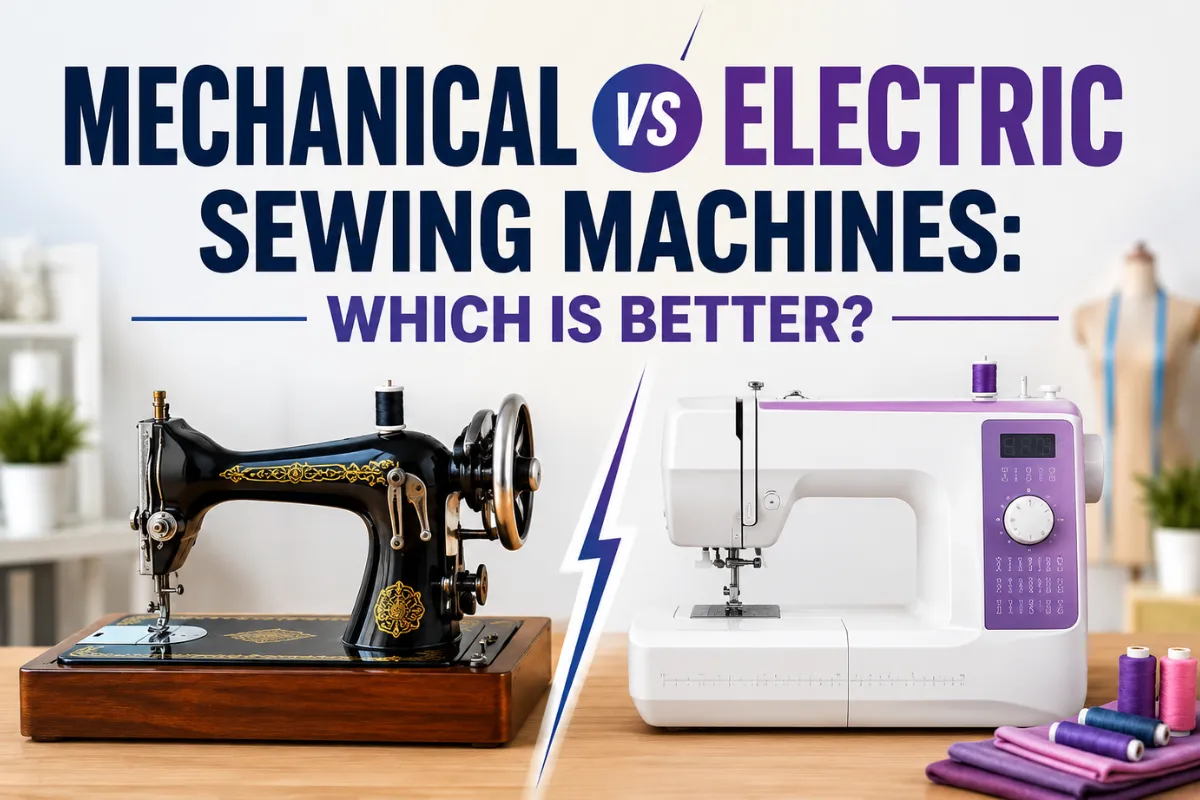
Choosing the right sewing machine can be confusing, especially for beginners or users upgrading from older models. One of the most common questions people ask before buying a sewing machine is whether they should choose a mechanical sewing machine or an electric sewing machine.
Both machine types are widely used for tailoring, home stitching, and garment work, but they are designed differently and serve different user needs. A machine that works perfectly for a beginner may not be suitable for a tailoring shop, and a machine ideal for commercial use may feel unnecessary for occasional household stitching.
Understanding the difference between mechanical and electric sewing machines helps users avoid buying the wrong machine. It also helps improve long-term stitching comfort, productivity, and maintenance experience.
For users in Chennai, where tailoring, boutique work, and home stitching continue to grow steadily, choosing the right machine category becomes even more important.
⚙️ What is a Mechanical Sewing Machine?
A mechanical sewing machine is operated using manual controls and physical mechanisms. These machines generally use knobs, levers, wheels, or foot-operated systems to control stitching functions.
Mechanical sewing machines are known for their simplicity, durability, and straightforward operation. Many traditional tailoring setups and households still use them because they are easy to maintain and reliable for regular stitching tasks.
Some models operate completely manually, while others use a basic motor but still rely on mechanical controls rather than electronic systems.
⚙️ What is an Electric Sewing Machine?
An electric sewing machine uses a motor-driven system for stitching operation. Unlike purely mechanical models, electric machines offer smoother operation, faster stitching, and additional convenience features.
Most modern home sewing machines today are electric models. These machines often include:
- Speed control
- Automatic stitching functions
- Multiple stitch patterns
- Easier fabric handling
- Reduced physical effort
Electric sewing machines are widely preferred by users who want convenience, better productivity, and smoother stitching experience.
🧵 Key Differences Between Mechanical and Electric Sewing Machines
Understanding the practical differences between these machine types helps users make better decisions.
⚙️ 1. Ease of Operation
Mechanical Sewing Machines
Mechanical machines are simple but require more manual handling. Users often need to manually adjust settings and maintain stitching rhythm.
Electric Sewing Machines
Electric machines are easier to operate, especially for beginners. The motor handles much of the movement, reducing physical effort.
Which is Better?
For beginners and casual users, electric machines usually feel easier and more comfortable.
⚙️ 2. Speed and Productivity
Mechanical Machines
Mechanical machines generally operate at slower speeds and require manual consistency.
Electric Machines
Electric machines provide smoother and faster stitching, making them more productive for regular work.
Which is Better?
For users handling frequent stitching work, electric machines offer better efficiency.
⚙️ 3. Maintenance and Repairs
Mechanical Machines
Mechanical sewing machines are often easier to repair because they have simpler internal systems.
Electric Machines
Electric machines may require professional servicing if motor or electronic components fail.
Which is Better?
Mechanical machines are generally easier and cheaper to maintain.
⚙️ 4. Stitching Flexibility
Mechanical Machines
Usually limited to basic stitching functions.
Electric Machines
Offer multiple stitch patterns and smoother fabric handling.
Which is Better?
Electric machines provide better versatility for modern sewing needs.
⚙️ 5. Durability
Mechanical Machines
Traditional mechanical machines are often extremely durable and long-lasting.
Electric Machines
Modern electric machines are reliable but may depend more on proper maintenance.
Which is Better?
Mechanical machines are often preferred for long-term durability.
⚙️ 6. Learning Curve
Mechanical Machines
Require users to understand manual controls more carefully.
Electric Machines
More beginner-friendly and easier to learn.
Which is Better?
Electric machines are generally easier for new users.
🧵 Which Machine is Better for Home Use?
For most home users today, electric sewing machines are often the preferred choice because they provide:
- Easier operation
- Faster stitching
- Better comfort
- Less physical effort
However, users who prefer traditional stitching methods or need very basic sewing support may still find mechanical machines practical.
The right choice depends on how frequently the machine will be used and what type of work will be done.
🧵 Which Machine is Better for Tailoring Shops?
Tailoring businesses often prioritize:
- Productivity
- Consistent stitching
- Speed
- Reliability
In many tailoring shops, electric or industrial machines are preferred because they improve efficiency and reduce physical strain.
However, some experienced tailors still prefer mechanical systems for specific stitching styles or long-term durability.
🧵 Which is Better for Beginners?
For beginners learning stitching, electric sewing machines are usually easier because:
- They require less manual effort
- Speed control is smoother
- Stitching becomes easier to manage
- The learning process feels less stressful
Mechanical machines can still be useful for learning fundamentals, but electric models often improve user confidence faster.
🧵 Cost Difference Between Mechanical and Electric Sewing Machines
Mechanical sewing machines are usually more affordable because they have simpler systems.
Electric machines may cost more depending on features such as:
- Motor strength
- Stitch patterns
- Automation functions
- Advanced controls
However, users should focus more on suitability than simply choosing the cheaper option.
🧵 Common Mistakes People Make When Choosing
❌ Buying Only Based on Price
Choosing the cheapest machine may lead to dissatisfaction later.
❌ Ignoring Usage Requirements
A machine suitable for occasional home use may not work well for regular tailoring work.
❌ Choosing Advanced Features Unnecessarily
Some users purchase complex machines they never fully use.
❌ Ignoring Service Support
After-sales support is important for long-term usability.
🏬 Chennai Sewing Machine Buying Perspective
In Chennai, both mechanical and electric sewing machines remain popular depending on user type.
Mechanical Machines are Common Among:
- Traditional tailoring users
- Long-term sewing professionals
- Basic stitching users
Electric Machines are Common Among:
- Beginners
- Home users
- Boutique setups
- Modern tailoring businesses
Buying from a trusted local sewing machine dealer helps users understand which machine category truly suits their work.
🧠 How to Decide Which Machine is Right for You
The best sewing machine is not the most expensive one—it is the machine that matches your actual stitching needs.
Choose a mechanical sewing machine if you:
- Prefer simplicity
- Need basic stitching
- Want easy maintenance
- Value long-term durability
Choose an electric sewing machine if you:
- Want smoother operation
- Need better productivity
- Prefer beginner-friendly controls
- Require stitching flexibility
Understanding your actual usage helps avoid poor purchase decisions.
🎯 Final Thoughts
Both mechanical and electric sewing machines have their own strengths. Mechanical machines are valued for simplicity, durability, and easy maintenance, while electric machines offer convenience, smoother operation, and better productivity.
There is no single “better” option for everyone. The right choice depends on your stitching goals, comfort level, budget, and long-term usage requirements.
For users in Chennai looking to invest in a sewing machine, understanding these practical differences helps ensure better satisfaction and long-term performance.
FAQ
Mechanical machines use manual controls, while electric machines use motor-driven systems for smoother and faster stitching.
Electric sewing machines are generally easier for beginners because they require less manual effort and offer smoother operation.
Yes, many users still prefer mechanical machines because they are durable, reliable, and easier to maintain.
Electric and industrial machines are usually better for tailoring businesses because they improve productivity and speed.
Not necessarily, but repairs may require professional support if electronic components are involved.
Mechanical sewing machines are often known for long-term durability when maintained properly.