
Single Needle vs Double Needle Sewing Machines

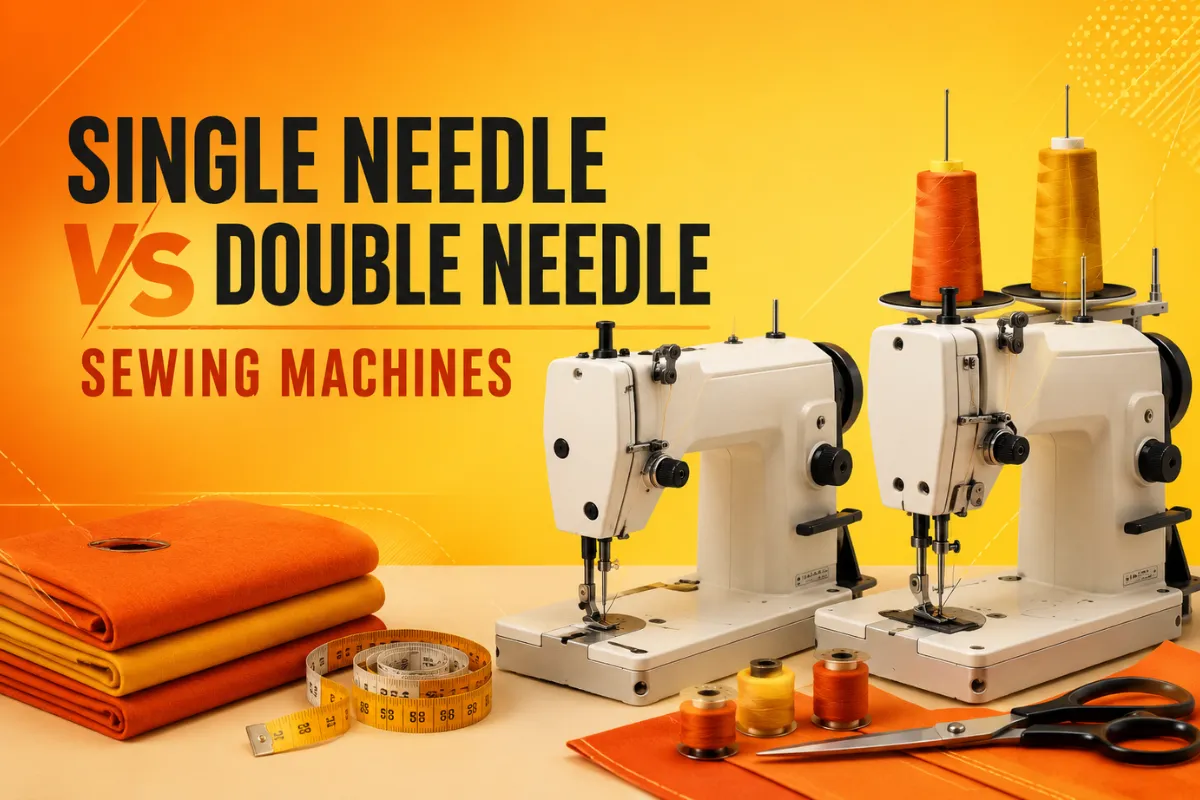
When selecting a sewing machine for tailoring, garment production, or industrial stitching, one of the most important decisions is choosing between a single needle sewing machine and a double needle sewing machine.
At first glance, both machines may appear similar because they are used for stitching garments and fabrics. However, their stitching capabilities, production applications, and overall functionality are very different.
Many beginners and small tailoring businesses often struggle to understand which machine category suits their actual work needs. Choosing the wrong machine can affect stitching quality, productivity, garment finishing, and workflow efficiency.
For tailoring professionals, boutiques, and garment units in Chennai, understanding the practical differences between single needle and double needle sewing machines is essential before making an investment.
🧵 What is a Single Needle Sewing Machine?
A single needle sewing machine uses one needle and one line of stitching during operation. It is one of the most commonly used sewing machine types across homes, tailoring shops, boutiques, and garment businesses.
Single needle machines are known for:
- Simplicity
- Versatility
- Ease of use
- Everyday stitching capability
They are widely used for:
- General garment stitching
- Alterations
- Blouse stitching
- Shirt stitching
- Daily tailoring work
Because of their flexibility, single needle machines are often considered the foundation of most tailoring setups.
🧵 What is a Double Needle Sewing Machine?
A double needle sewing machine uses two needles simultaneously to create two parallel lines of stitching.
These machines are mainly used for:
- Decorative stitching
- Reinforced seams
- Professional garment finishing
- Industrial garment production
Double needle stitching is commonly seen in:
- Jeans
- Uniforms
- Shirts
- Sportswear
- Industrial garments
The machine improves seam strength and creates a more professional production finish.
🧵 Main Difference Between Single Needle and Double Needle Machines
The biggest difference lies in stitching structure and production purpose.
Single Needle Machine:
- Uses one needle
- Creates one stitch line
- More flexible for general stitching
Double Needle Machine:
- Uses two needles simultaneously
- Creates parallel stitch lines
- Designed for stronger and more professional seam finishing
Although both machines are useful, they serve different production goals.
🧵 How Single Needle Machines Work
Single needle machines create a single stitch line using:
- One needle
- One upper thread path
- One lower bobbin system
This setup allows:
- Simpler operation
- Easier fabric handling
- Flexible stitching control
Single needle machines are suitable for a wide variety of stitching applications.
🧵 How Double Needle Machines Work
Double needle machines use:
- Two needles
- Two upper thread paths
- Coordinated stitching mechanisms
The machine creates:
- Parallel stitch lines
- Stronger seams
- More professional garment appearance
This type of stitching improves both durability and visual finish.
🧵 Advantages of Single Needle Sewing Machines
⚙️ Easy to Operate
Suitable for beginners and regular tailoring work.
⚙️ More Flexible
Handles multiple stitching applications easily.
⚙️ Easier Maintenance
Simpler internal mechanisms reduce maintenance complexity.
⚙️ Cost Effective
Usually more affordable than double needle systems.
⚙️ Ideal for Daily Tailoring
Widely used for regular stitching tasks.
🧵 Advantages of Double Needle Sewing Machines
⚙️ Stronger Stitching
Parallel stitching improves seam durability.
⚙️ Professional Garment Finish
Creates industrial-style stitching appearance.
⚙️ Better for Mass Production
Improves production consistency.
⚙️ Suitable for Heavy Usage
Commonly used in industrial garment environments.
⚙️ Decorative Appeal
Double stitching often improves garment aesthetics.
🧵 Which Machine is Better for Tailoring Shops?
For most regular tailoring shops, single needle sewing machines are more practical because:
- They are versatile
- Easier to use
- Suitable for daily garment stitching
- More flexible across different fabric types
However, tailoring businesses focused on:
- Uniform production
- Jeans stitching
- Industrial garment work
may also require double needle machines for professional finishing.
🧵 Which Machine is Better for Garment Manufacturing?
Garment production units often use both machines depending on workflow.
Single Needle Machines:
Used for general stitching and garment assembly.
Double Needle Machines:
Used for:
- Reinforced seams
- Decorative stitching
- Industrial finishing work
Large garment factories usually integrate both systems for production efficiency.
🧵 Which Machine is Better for Beginners?
For beginners, single needle machines are usually the better option because:
- Easier learning curve
- Simpler operation
- More practical for general stitching
- Lower maintenance complexity
Double needle machines are more specialized and often become useful as tailoring or production needs grow.
🧵 Fabric and Garment Applications
🧵 Single Needle Machines Commonly Used For:
- Blouses
- Shirts
- Salwars
- Basic garments
- Alterations
🧵 Double Needle Machines Commonly Used For:
- Jeans
- Uniforms
- Sportswear
- Industrial garments
- Decorative seam work
The machine choice depends heavily on garment category and production requirements.
🧵 Common Mistakes Buyers Make
❌ Buying a Double Needle Machine Too Early
Many beginners purchase advanced machines without needing them.
❌ Ignoring Production Needs
Machine selection should match actual stitching goals.
❌ Choosing Based Only on Appearance
Professional-looking machines are not always necessary.
❌ Ignoring Service Support
Industrial machines require proper maintenance access.
🧵 Importance of Choosing Based on Work Type
Before buying any sewing machine, users should evaluate:
- Fabric type
- Stitching volume
- Business goals
- Garment category
- Productivity requirements
The best machine is not the most expensive one—it is the one that matches actual sewing needs.
🏬 Chennai Tailoring and Garment Industry Perspective
In Chennai, single needle machines remain extremely common because:
- Tailoring shops are widespread
- Blouse stitching demand is high
- Alteration work is constant
- Home tailoring is growing again
At the same time, double needle machines are widely used in:
- Garment units
- Uniform manufacturing
- Industrial stitching setups
- Production-oriented businesses
Buying from trusted local sewing machine dealers helps users:
- Understand machine differences
- Choose suitable machine types
- Access service support
- Avoid unnecessary investment mistakes
For beginners especially, local guidance can make a major difference.
🧠 Do You Need Both Machines?
In many professional garment environments, yes.
Single Needle Machines:
Used for regular garment stitching.
Double Needle Machines:
Used for reinforcement and professional finishing.
Smaller tailoring setups may only need single needle machines initially, while larger production setups often integrate both machine types.
🎯 Final Thoughts
Single needle and double needle sewing machines both play important roles in tailoring and garment production, but they are designed for different purposes.
Single needle machines are flexible, beginner-friendly, and suitable for everyday tailoring work. Double needle machines focus more on professional finishing, stronger seams, and industrial garment production.
There is no universal “better” machine. The right choice depends on:
- Your stitching goals
- Garment category
- Production scale
- Budget
- Long-term business needs
For tailoring professionals and garment users in Chennai, understanding these practical differences helps create more efficient, productive, and reliable sewing setups.
Choosing the right machine at the right stage can improve both stitching quality and long-term workflow efficiency.
FAQ
Single needle machines create one stitch line, while double needle machines create two parallel stitch lines simultaneously.
Single needle sewing machines are generally better for beginners because they are easier to operate and more versatile.
They are commonly used in garment factories, jeans stitching, uniforms, and industrial production setups.
Yes, single needle machines are widely used for regular tailoring, alterations, and garment stitching.
Not always. Many small tailoring shops operate efficiently with single needle machines.
Because different stitching stages require different seam structures and production functions.