

Common Sewing Machine Problems and How to Fix Them

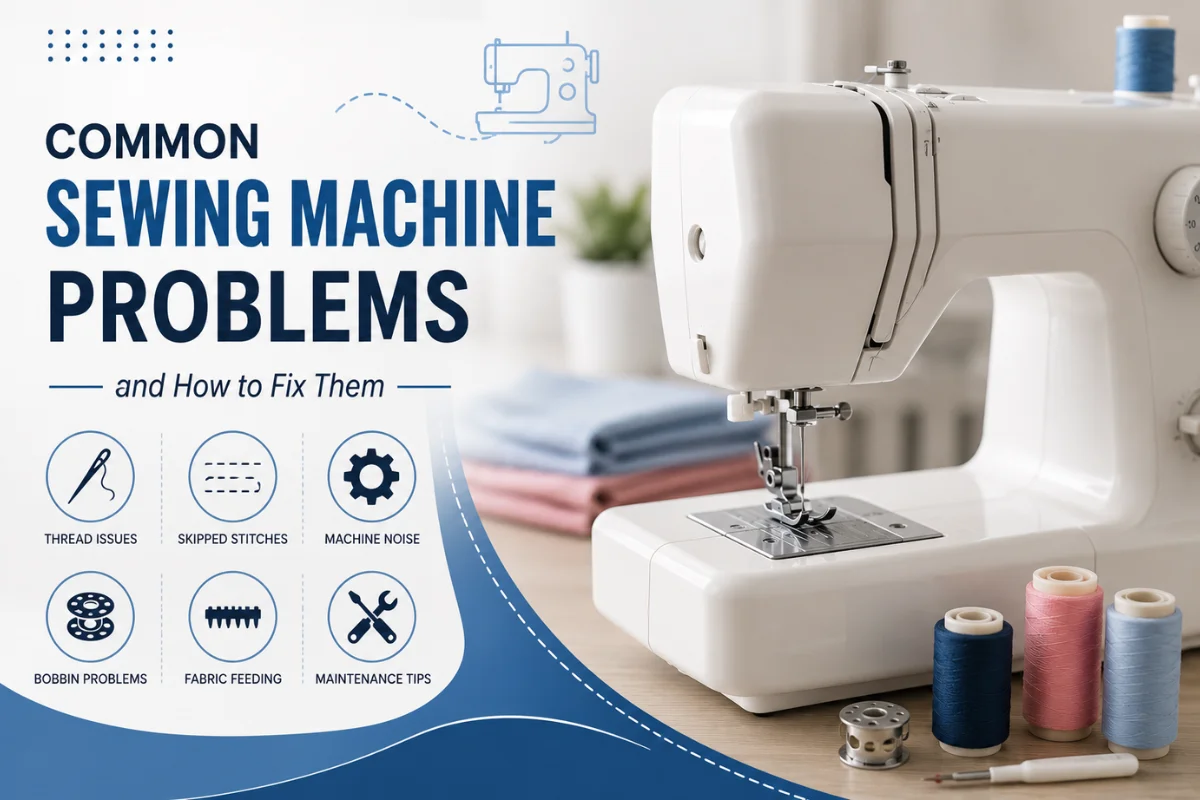
A sewing machine is one of the most useful tools for home stitching, tailoring, and garment production. However, like any regularly used machine, sewing machines can sometimes develop problems that affect stitching quality, speed, and overall performance.
Many users panic when a machine stops stitching properly or starts making unusual noises. In reality, most sewing machine issues are caused by small operational mistakes, lack of maintenance, incorrect settings, or worn-out components. Understanding these problems early can help users avoid bigger repairs and improve machine lifespan.
For home users, tailors, boutiques, and garment businesses in Chennai, sewing machine reliability directly affects productivity and work quality. Learning how to identify and fix common sewing machine problems is an important skill that saves both time and money.
⚙️ Why Sewing Machine Problems Happen
Sewing machines operate through multiple moving parts working together continuously. Problems usually happen because of:
- Dust accumulation
- Incorrect threading
- Needle damage
- Poor maintenance
- Fabric overload
- Low-quality accessories
- Improper machine handling
In many cases, the issue is not the machine itself but how it is being used.
🧵 1. Thread Breaking Frequently
Thread breaking is one of the most common sewing machine problems faced by both beginners and experienced users.
🔍 Common Causes
- Incorrect threading
- Tension issues
- Damaged needle
- Low-quality thread
- Needle inserted incorrectly
⚙️ How to Fix It
Re-thread the Machine Properly
Remove the thread completely and re-thread carefully following the machine path.
Check the Needle
Bent or damaged needles often cause thread breakage.
Adjust Thread Tension
Too much tension can strain the thread and cause snapping.
Use Good Quality Thread
Cheap thread can weaken easily during stitching.
🧵 2. Uneven or Skipped Stitches
Skipped stitches or inconsistent stitching can affect garment quality significantly.
🔍 Common Causes
- Bent needle
- Incorrect needle size
- Poor threading
- Fabric handling issues
⚙️ How to Fix It
Replace the Needle
A fresh needle often solves the problem immediately.
Match Needle to Fabric Type
Different fabrics require different needle sizes.
Check Threading Again
Improper threading can disturb stitch formation.
Maintain Steady Fabric Movement
Pulling fabric too hard may affect stitch consistency.
🧵 3. Needle Breaking Repeatedly
Broken needles are frustrating and can damage both fabric and machine parts.
🔍 Common Causes
- Pulling fabric forcefully
- Incorrect needle installation
- Wrong needle type
- Sewing over thick layers beyond machine capability
⚙️ How to Fix It
Install the Needle Correctly
Ensure the needle is inserted fully and tightened properly.
Avoid Pulling Fabric
Allow the machine to feed fabric naturally.
Use Suitable Needles
Heavy fabrics require stronger needles.
Slow Down on Thick Materials
Do not overload basic machines with heavy stitching tasks.
🧵 4. Machine Making Unusual Noise
A sewing machine should operate smoothly. Loud or unusual noises often indicate maintenance issues.
🔍 Common Causes
- Lack of lubrication
- Dust accumulation
- Loose internal parts
- Thread jams
⚙️ How to Fix It
Clean the Machine Regularly
Dust and lint often collect around the bobbin area.
Oil the Machine Properly
Lubrication helps reduce friction between moving parts.
Remove Thread Jams
Check for tangled thread inside the machine.
Avoid Continued Use During Loud Noise
Ignoring strange sounds can worsen damage.
🧵 5. Fabric Not Feeding Properly
Sometimes fabric stops moving smoothly while stitching.
🔍 Common Causes
- Feed dog blockage
- Incorrect presser foot pressure
- Dust accumulation
- Improper fabric handling
⚙️ How to Fix It
Clean Feed Dogs
Dust and lint can reduce feeding performance.
Adjust Presser Foot Properly
Ensure the foot is positioned correctly.
Avoid Forcing Fabric
Let the machine feed fabric naturally.
🧵 6. Bobbin Problems
Bobbin-related issues are extremely common in sewing machines.
🔍 Common Causes
- Incorrect bobbin insertion
- Uneven bobbin winding
- Low-quality bobbin
- Thread tangling
⚙️ How to Fix It
Reinsert the Bobbin Correctly
Follow proper placement instructions.
Wind the Bobbin Evenly
Uneven winding affects stitching consistency.
Clean the Bobbin Area
Dust and lint often create thread jams.
🧵 7. Machine Not Starting
Sometimes the machine may fail to start completely.
🔍 Common Causes
- Power connection issues
- Motor problems
- Foot pedal malfunction
- Loose wiring
⚙️ How to Fix It
Check Power Supply
Ensure proper electrical connection.
Inspect the Foot Pedal
Damaged pedals may stop machine operation.
Avoid DIY Motor Repairs
Motor-related issues should be handled professionally.
🧵 8. Thread Bunching Under Fabric
This problem creates tangled thread underneath the material.
🔍 Common Causes
- Incorrect upper threading
- Tension imbalance
- Bobbin installation errors
⚙️ How to Fix It
Re-thread the Upper Thread
Incorrect threading is often the main reason.
Check Tension Settings
Balance upper and lower thread tension properly.
Inspect the Bobbin
Ensure smooth placement and threading.
🧵 Importance of Regular Sewing Machine Maintenance
Many sewing machine problems can be avoided through simple maintenance habits.
⚙️ Basic Maintenance Tips
Clean the Machine Frequently
Dust and lint affect machine performance.
Oil Moving Parts
Lubrication reduces friction and wear.
Change Needles Regularly
Old needles reduce stitching quality.
Use Quality Accessories
Poor-quality thread and needles increase machine stress.
Cover the Machine When Not in Use
Protects against dust accumulation.
Regular maintenance improves machine lifespan significantly.
🏬 Chennai Sewing Machine Service Perspective
In Chennai, sewing machines are widely used across households, tailoring shops, boutiques, and garment businesses. Because machines are used frequently, proper service support becomes extremely important.
Many users ignore minor issues until they become serious problems. Early maintenance and expert guidance help avoid expensive repairs.
Buying from trusted local sewing machine dealers often makes servicing easier because:
- Spare parts are more accessible
- Maintenance support is nearby
- Machine guidance becomes more reliable
For long-term sewing machine performance, local support matters significantly.
🧠 When Should You Seek Professional Service?
Some issues should not be handled without technical expertise.
Seek professional service if:
- Motor issues occur
- Internal timing problems develop
- Machine vibration becomes excessive
- Electrical burning smell appears
- Repeated stitching issues continue despite adjustments
Ignoring serious issues can damage the machine further.
🎯 Final Thoughts
Sewing machine problems are common, but many of them are simple to identify and fix. In most cases, issues happen because of incorrect threading, poor maintenance, worn needles, or improper handling rather than major machine damage.
Understanding these problems helps users improve stitching quality, reduce downtime, and extend machine lifespan. Whether you are a home user, tailor, boutique owner, or commercial sewing operator in Chennai, regular maintenance and proper usage play a major role in keeping sewing machines running smoothly.
The better you understand your machine, the more reliable and productive your sewing experience becomes.
FAQ
Thread breakage usually happens due to incorrect threading, tension issues, damaged needles, or poor-quality thread.
Skipped stitches are commonly caused by bent needles, incorrect threading, or unsuitable needle sizes.
Regular cleaning is recommended, especially if the machine is used frequently for tailoring or garment work.
Noise may happen because of dust buildup, lack of lubrication, or internal thread jams.
Needles should be replaced regularly, especially if stitching quality decreases or fabric damage occurs.
No, motor and electrical problems should be handled by experienced sewing machine technicians.